


Summer menswear comes with more rules than any other season. As soon as temperatures rise, we’re told to wear linen, swap dark colours for pale ones, ditch tailoring, embrace sandals and show a little more skin. Some of this advice is rooted in practicality. Much of it is simply repeated because it always has been.
The problem is that style rules tend to become outdated. What worked decades ago doesn’t necessarily make sense today, especially when modern fabrics, relaxed tailoring and changing attitudes towards dress have transformed the way men build their wardrobes.
The truth is that the best-dressed men rarely follow every rule to the letter. Instead, they understand the principles behind them and know when it’s worth making an exception.
These are the summer style rules that deserve to be challenged.
“You Can’t Wear Black In Summer”
Black is often treated as a seasonal taboo. The theory goes that dark colours absorb more heat, making them impractical once summer arrives. While there’s some scientific truth behind that, the reality is far more nuanced.
Fabric plays a much bigger role in comfort than colour ever will. A lightweight black linen shirt, a breathable cotton poplin overshirt, or relaxed drawstring trousers will feel considerably cooler than a heavyweight white Oxford shirt or thick chinos. Construction matters more than shade.
There’s also a reason many of the world’s most stylish men continue to wear black throughout the summer. It creates clean lines, looks sophisticated and pairs effortlessly with everything else in your wardrobe. Brands such as Our Legacy, Lemaire and The Row regularly build entire warm-weather collections around darker palettes because they understand that texture and silhouette can do the heavy lifting where colour normally would.
Rather than avoiding black altogether, think about how you wear it. Opt for breathable fabrics, relaxed fits and lighter-weight pieces. A black linen shirt with ecru trousers or tailored shorts can look every bit as seasonal as a pastel alternative, while feeling considerably more refined.
“Linen Is The Only Fabric Worth Wearing”

If summer menswear had an official mascot, it would probably be linen.
Every year, style advice columns tell men to replace half their wardrobe with it, and for good reason. Linen is lightweight, breathable and naturally suited to warmer temperatures. However, treating it as the only worthwhile summer fabric ignores a host of excellent alternatives.
Modern cotton-linen blends offer many of linen’s benefits while creasing less aggressively. Tropical wool provides exceptional breathability for tailoring. Seersucker creates airflow thanks to its puckered texture. Tencel and Lyocell fabrics drape beautifully and feel cool against the skin. Even lightweight cotton poplin can outperform poorly made linen garments.
Many men buy head-to-toe linen because they’ve been told it’s the answer to summer dressing, only to spend the day looking as though they’ve slept in their clothes. While some creasing is part of linen’s charm, not everyone enjoys the effect.
The smarter approach is to focus on breathability rather than obsess over a single fabric. The best summer wardrobes tend to combine different materials, using each where it works best.
“Shorts Should Always Sit Above The Knee”

One of the most repeated pieces of menswear advice in recent years has been that shorts should finish well above the knee. Social media has only accelerated the trend, with shorter inseams becoming increasingly common. The reality is that there is no universally flattering shorts length.
A five-inch inseam can look fantastic on some men, particularly those with athletic builds or average proportions. On taller men, however, the same shorts can appear disproportionately short. Likewise, men with larger thighs often find slightly longer cuts create a more balanced silhouette.
The goal shouldn’t be chasing a specific measurement. It should be achieving proportion. Most men look best somewhere between mid-thigh and just above the knee, but exactly where that falls will depend on height, build and personal preference. A tailored seven-inch short might look far more elegant than a trendier five-inch alternative.
Instead of focusing on arbitrary rules, pay attention to how the shorts work with the rest of your outfit. Proportion will always matter more than following the latest inseam trend.
“Tailoring Is Too Hot For Summer”
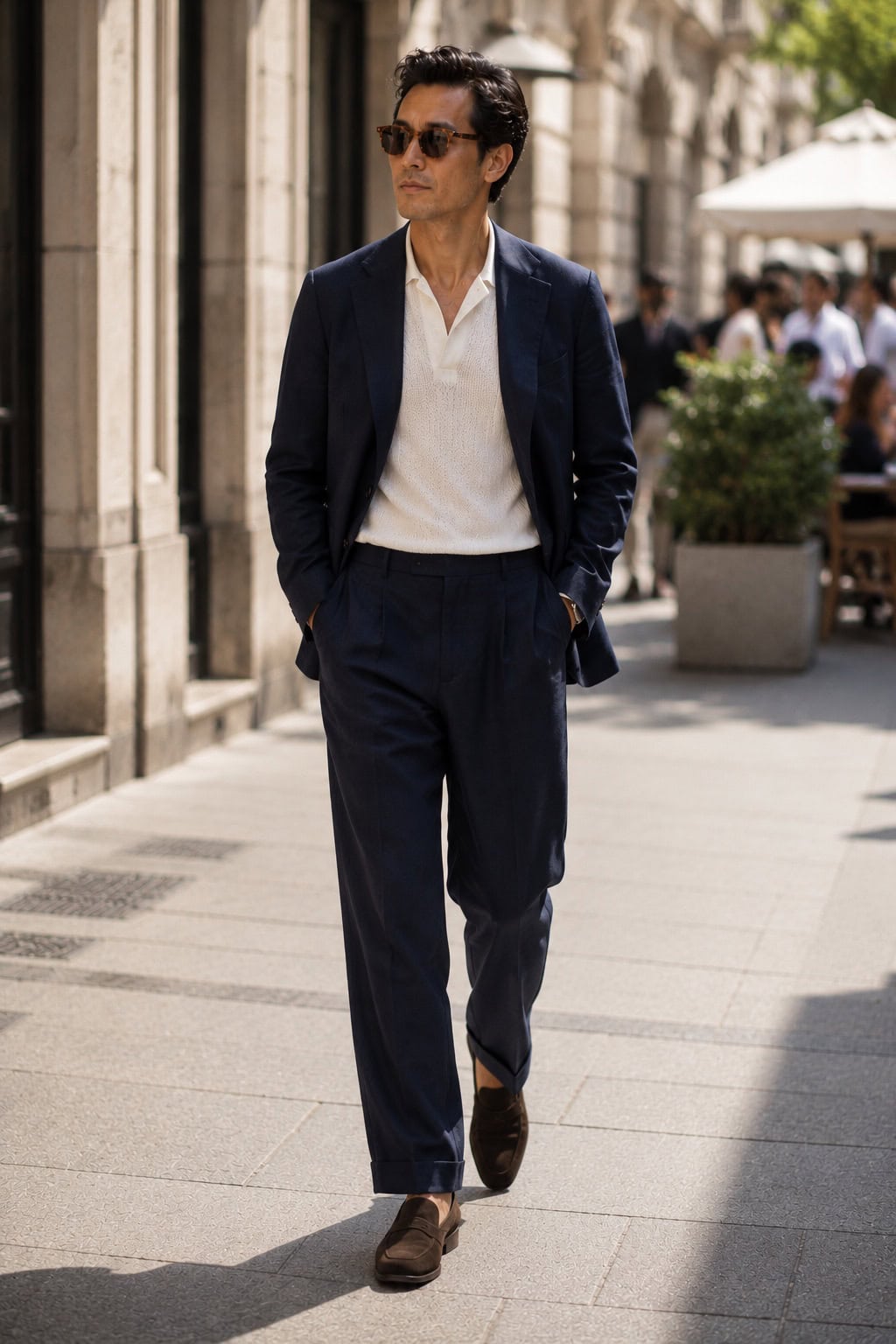
Many men treat tailoring as something that gets packed away the moment temperatures begin to climb. Suits are associated with boardrooms, weddings and uncomfortable commutes, not hot afternoons spent outdoors.
The problem is that most people are judging modern tailoring by the standards of old-fashioned business suits.
Today’s best tailoring is designed very differently. Unlined and half-lined jackets remove much of the internal structure that creates heat. Soft shoulders make garments feel less restrictive. Lightweight fabrics such as tropical wool, linen and cotton blends allow air to circulate far more effectively than traditional worsted wool.
In fact, a well-made summer suit can often feel cooler than a pair of heavyweight denim jeans and a thick cotton T-shirt. The fabric sits away from the body, encouraging airflow rather than trapping heat against the skin.
The key is choosing tailoring specifically designed for warm weather. Think relaxed cuts, lighter colours and breathable fabrics. A softly tailored linen blazer worn over a knitted polo can look polished while remaining comfortable throughout the day.
Rather than avoiding tailoring altogether, rethink what tailoring means. Summer is arguably the season when modern soft tailoring makes the most sense.
“Sandals Are Essential”

Few summer style recommendations divide opinion quite like sandals. Fashion editors love them. Designers continue pushing them. Every year, we’re told they’re an essential warm-weather purchase. Yet many men simply don’t enjoy wearing them.
Whether it’s personal preference, concerns about exposing their feet or the fact that sandals don’t fit naturally with their wardrobe, forcing the issue rarely leads to better style.
Fortunately, there are plenty of alternatives that deliver the same relaxed summer feel. Suede loafers, woven leather slip-ons, espadrilles and lightweight canvas trainers all work beautifully in warm weather without requiring a full commitment to the sandal trend.
The most important thing is wearing footwear that feels authentic to you. Summer style should feel effortless. If you’re constantly thinking about the fact that you’re wearing sandals, chances are they’re not the right choice.
There’s nothing stylish about forcing yourself into a trend that doesn’t suit your personality.
“You Need Bright Colours In Summer”

Every summer arrives with an explosion of pastel pinks, powder blues, mint greens and citrus shades. For some men, that’s great news. For others, it’s a quick reminder that dressing like a gelato stand isn’t particularly appealing.
The good news is that bright colours aren’t a requirement. In fact, many of the strongest summer wardrobes rely on a much more restrained palette.
Stone, ecru, olive, tobacco, chocolate brown, navy and soft grey all work exceptionally well in warm weather. These colours feel seasonal without screaming for attention and often pair together more easily than brighter alternatives.
One of the biggest misconceptions in menswear is that summer style is defined by colour. More often, it comes from texture. A cream knitted polo, olive linen trousers and dark brown suede loafers will usually look more sophisticated than a brightly coloured outfit built around louder shades.
If vibrant colours suit your personality, wear them. If they don’t, there’s absolutely no reason to abandon the palette you wear throughout the rest of the year.
“White Trainers Go With Everything”

For the last decade, white trainers have become the default recommendation for almost every outfit imaginable. Need a versatile shoe? White trainers. Smart-casual dress code? White trainers. Summer holiday? White trainers.
While there’s no denying their versatility, many wardrobes have become overly reliant on them.
The problem isn’t that white trainers look bad. It’s that they often become the automatic choice when better options exist. A pair of chocolate suede loafers can add warmth and sophistication to summer tailoring. Taupe trainers feel softer and more refined than stark white leather. Woven slip-ons offer texture and character that basic trainers simply can’t match.
White trainers also come with a practical drawback. Keeping them pristine through summer barbecues, festivals, city breaks and holidays can become a full-time job.
The solution isn’t abandoning white trainers entirely. It’s recognising them as one option among many rather than the answer to every footwear question. The best-dressed men tend to build variety into their wardrobes, choosing footwear based on the outfit rather than defaulting to the same shoe every time.
“Layering Doesn’t Work In Summer”

Layering is often viewed as an autumn and winter technique. Once the weather warms up, many men strip their outfits back to a single shirt and call it a day. Unfortunately, this approach often leaves outfits looking flat and uninspired.
The secret is understanding that summer layering isn’t the same as winter layering. You’re not piling on thick knitwear and heavy outerwear. Instead, you’re introducing lightweight pieces that add depth without adding significant warmth.
An unstructured linen blazer instantly elevates a simple T-shirt and trousers. A lightweight overshirt creates visual interest while remaining easy to remove if temperatures rise. Even a fine-gauge knit draped over the shoulders can make an outfit feel more considered.
There’s also a practical benefit. Summer weather, particularly in Britain, is notoriously unpredictable. A day that begins at 24 degrees can easily end with temperatures dropping into the mid-teens after sunset.
By embracing lightweight layers, you create outfits that adapt throughout the day while looking considerably more stylish.
“You Need To Show More Skin To Stay Cool”

When temperatures rise, the instinctive response is often to remove as much clothing as possible. Shorter shorts, sleeveless tops and minimal coverage are frequently presented as the logical solution to hot weather. While that approach may feel cooler initially, it’s not always the most effective strategy.
Many of the world’s hottest regions offer a useful lesson. Across the Mediterranean, North Africa and the Middle East, loose-fitting garments that cover the body are often preferred over exposing more skin. The reason is simple: breathable fabrics protect the body from direct sunlight while allowing air to circulate.
A relaxed linen shirt with sleeves rolled casually to the forearm will often feel more comfortable than a tight-fitting vest. Wide-leg linen trousers can feel cooler than slim shorts when temperatures become extreme. The real goal isn’t exposing skin. It’s encouraging airflow.
Focus on lighter fabrics, looser fits and breathable materials rather than automatically removing layers. You’ll often feel more comfortable, and you’ll almost certainly look better.
“Summer Clothes Should Only Be Worn In Summer”

Many men view seasonal clothing as a short-term investment. Linen shirts emerge for a few months before being hidden away again. Drawstring trousers disappear at the first sign of autumn. Lightweight tailoring is reserved exclusively for holidays and weddings.
This mindset often leads to wardrobes filled with highly specialised pieces that offer limited value throughout the rest of the year.
In reality, many of summer’s best garments work surprisingly well across multiple seasons. A linen shirt layered beneath a merino crew neck can look fantastic throughout autumn. Drawstring trousers pair effortlessly with heavier overshirts and knitwear during spring. A lightweight, unstructured blazer can become a year-round staple when worn with darker colours and seasonal textures.
Thinking this way changes how you shop. Instead of buying clothes for a single season, you start building a wardrobe in which pieces work together year-round.
Not only does this improve cost per wear, it also helps create a more cohesive personal style. The best-dressed men don’t reinvent themselves every season. They simply adapt the same core wardrobe to suit changing conditions.