All posts tagged: Conspiracy

The United States of Conspiracy | Donald Trump

The United States of Conspiracy | Donald Trump

Another assassination attempt on Donald Trump reveals mistrust in the media and conspiracy theories fill the gap. An assassination attempt at the White House correspondents’ dinner underscored the spectacle, chaos and violence that have defined Donald Trump’s second presidency. As journalists rushed to report what had happened, a parallel narrative of conspiracy was already taking shape online. Conspiracy theories get far more currency than they merit – and they are a by-product of an information landscape that has been muddied by Trump. Contributors:John Nichols – Executive editor, The NationNiall Stanage – White House columnist, The HillAmber Duke – Editor-in-chief, Daily CallerSuzanne Kianpour – Cohost, Global Power Shifts podcast On our radar Russia’s effort to tighten internet restrictions and throttle Telegram has caused a furious public backlash. The uproar has forced President Vladimir Putin to admit the measures went too far. Ryan Kohls reports. Israel’s information war on Lebanon Throughout two years of war, Israeli forces have used drones, AI-powered targeting and the infiltration of Lebanese communications devices and the networks they rely on – to …

Psychology study finds sharing conspiracy theories sabotages early romantic connections

Psychology study finds sharing conspiracy theories sabotages early romantic connections

Disclosing a belief in conspiracy theories on an online dating profile generally reduces your chances of securing a match. People who endorse these ideas in their biographies encounter harsher judgments and fewer romantic prospects, though politically conservative individuals tend to be more forgiving of such disclosures. These findings were published in the Personality and Social Psychology Bulletin. Conspiracy theories propose that groups of powerful people are secretly coordinating to achieve some hidden outcome at the expense of the public. Psychological research suggests that people endorse these narratives in an unconscious attempt to relieve feelings of anxiety or to regain a sense of control over unpredictable world events. Becoming consumed by these ideas carries serious interpersonal costs. Voicing these beliefs can strain established social connections and alienate peers. Family members and friends often report reduced satisfaction in their relationships when a loved one begins endorsing hidden plots. Romantically, having a partner who adopts these worldviews often precedes increased conflict and a loss of intimacy. Researchers wanted to know how these highly polarizing opinions affect the very …

The View co-host calls out conspiracy theories over White House Correspondents’ Dinner shooting: ‘Where are we in America?’

The View co-host calls out conspiracy theories over White House Correspondents’ Dinner shooting: ‘Where are we in America?’

Get the latest entertainment news, reviews and star-studded interviews with our Independent Culture email Get the latest entertainment news with our free Culture newsletter Get the latest entertainment news with our free Culture newsletter The View co-host Ana Navarro is pushing back on conspiracy theories that are swirling in the aftermath of the shooting at the White House Correspondents’ Dinner. During Monday’s Hot Topics segment of ABC’s daytime talk show, Navarro and her fellow panelists shared their reactions to learning that gunfire had erupted at Saturday’s annual black-tie event at the Washington Hilton. The sound of shots being fired prompted President Donald Trump and other executive members of his administration to be rushed out of the room while Secret Service agents apprehended the suspected shooter, 31-year-old Cole Tomas Allen, who has now been charged with attempting to assassinate the president. Navarro said that after the shock of the alleged attack wore off, she became disturbed by rampant online speculation that the shooting had been “staged” by the Trump administration. “I don’t think that,” she said …

False flag conspiracy theories swirl around White House Correspondents’ Dinner attack

False flag conspiracy theories swirl around White House Correspondents’ Dinner attack

A flood of misinformation, conspiracy theories and false claims about the shooting at Saturday night’s White House Correspondents’ Association dinner spread online at a notable and concerningly speedy rate, mostly about the baseless theory that the incident had been staged. Subscribe to read this story ad-free Get unlimited access to ad-free articles and exclusive content. The speculation on social media began to swirl within minutes of the first reports of shots fired, picking up steam throughout Sunday despite journalists — the vast majority of the gala’s attendees — and authorities quickly releasing verified and evidence-backed information about the suspect. There is no evidence that Saturday night’s incident was staged. Authorities have released ample evidence that Cole Tomas Allen, 31, from Torrance, California, rushed the event while armed and was stopped by law enforcement. A senior administration official said the suspect’s brother told authorities that Cole Allen had sent him and other family members writings displaying anti-Trump sentiment prior to the incident. Even President Donald Trump, long known for distributing conspiracy theories online, took note of …

‘STAGED’: Conspiracy Theories Are Everywhere Following White House Correspondents’ Dinner Shooting

‘STAGED’: Conspiracy Theories Are Everywhere Following White House Correspondents’ Dinner Shooting

In the immediate aftermath of the attack on the White House Correspondents’ Dinner on Saturday night, influencers, pundits, and random posters lit up social media platforms like X, Bluesky, and Instagram with conspiracy theories about the attack and the alleged shooter. Both left and right-wing accounts claimed, without evidence, that the attack was staged. President Donald Trump, Vice President JD Vance, and dozens of other high-profile administration officials and journalists were attending the dinner at the Hilton hotel in Washington, DC, when a suspect, later identified by media reports as Cole Tomas Allen from California, allegedly ran past security towards the event. He was detained by law enforcement while the president and vice president were evacuated. Police said that they believe Cole acted alone, but did not expand on who his intended target was or what his motive may have been. “We believe the suspect was targeting administration officials,” acting attorney general Todd Blanche told NBC’s Meet the Press on Sunday morning. On Bluesky, which has a predominantly left-leaning user base, many people simply wrote …

11 Scientists Are Dead or Missing. It Was Only a Matter of Time Before Conspiracy Theories Hit the White House.

11 Scientists Are Dead or Missing. It Was Only a Matter of Time Before Conspiracy Theories Hit the White House.

Proponents of some variant of the conspiracy, Radford adds, are working backward. “They’re finding people who are already dead or missing and then trying to find some connection, however tenuous,” he says, “to the defense industry, the Pentagon, UFOs, UAP, NASA.” (McCasland’s flimsy link to the UFO community is, among the scientists, the most substantive connection to these subjects.) In a comprehensive rejoinder to the theory, UFO investigator and pseudoscience debunker Mick West pointed out that the US top-secret-cleared aerospace and nuclear workforce includes about 700,000 people. Ordinary mortality rates over the time span of some of the purportedly linked deaths and disappearances would predict, he said, around 4,000 deaths, 70 homicides, and 180 suicides in this community—as of this week, Rogan, Kraus, et al. are working with 11 cases. “People just kind of go looking for names,” West tells me, “and if you go looking for names, you’re gonna find them.” What West describes as “death-list fallacies” have a rich history as a kind of conspiracy theory folk tradition. Beginning in the 1960s, the …

New study reveals how political bias conditions the impact of conspiracy thinking

New study reveals how political bias conditions the impact of conspiracy thinking

A recent study published in Political Psychology suggests that a person’s general tendency to believe in conspiracies strongly predicts their endorsement of specific political rumors, but mostly when those rumors attack their political rivals. The research provides evidence that psychological traits and political loyalties work together to shape what people are willing to believe. These findings help explain how political divisions feed into the spread of misinformation. Previous work has identified two separate predictors of these beliefs. First, people have varying levels of “conspiracy thinking,” which is a general psychological tendency to assume that secret, sinister forces control world events. Second, people tend to favor their own political groups. They usually accept theories that blame their political rivals and reject theories that accuse their own side. The researchers designed this study to see if these two separate factors actually interact with one another. The scientists suspected that general conspiracy thinking might have a stronger effect when a rumor aligns with a person’s political bias. People naturally want to protect the reputation of their own group …

Trump administration moves to erase Jan. 6 riot convictions for seditious conspiracy : NPR

Trump administration moves to erase Jan. 6 riot convictions for seditious conspiracy : NPR

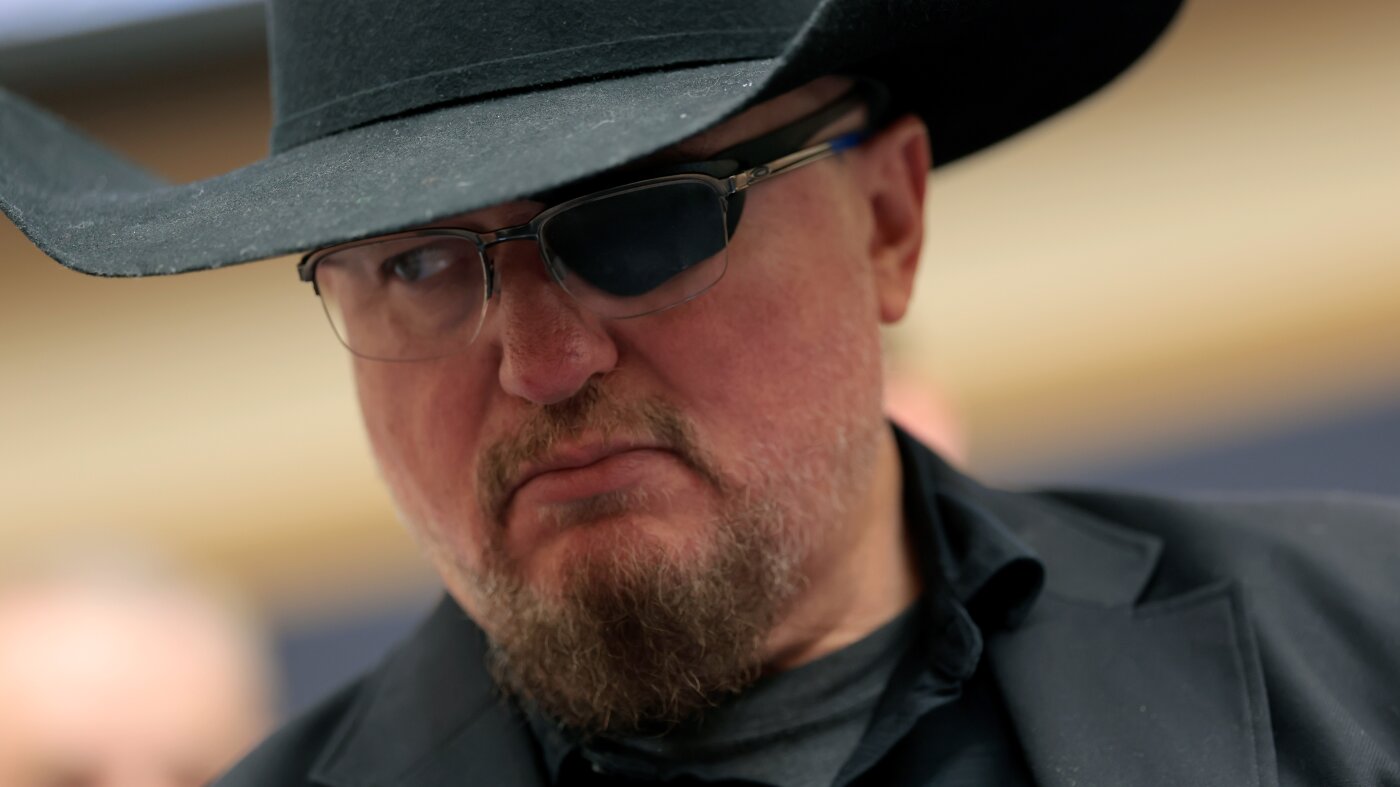
President Trump did not grant Stewart Rhodes, founder of the far-right Oath Keepers extremist group, a full pardon when he returned to office. Now, the Trump administration is seeking to vacate the seditious conspiracy convictions for several defendants, including Rhodes. Heather Diehl/Getty Images hide caption toggle caption Heather Diehl/Getty Images In the latest move to rewrite the history of the violent Jan. 6, 2021, attack on the U.S. Capitol, the Department of Justice has filed papers seeking to vacate the seditious conspiracy convictions against members of the Proud Boys and Oath Keepers extremist groups, who previously received commutations rather than full pardons from President Trump. About a dozen defendants who received lengthy sentences for their roles in planning and executing the riot were released from prison once Trump returned to office, though the felony convictions remained on their records. If approved by the federal courts, the move would wipe out those convictions and, among other things, restore the defendants’ right to own guns. On Tuesday, the Trump administration described the decision in court filings as …