All posts tagged: extinct

An extinct human species made surprisingly creative butchery tools

An extinct human species made surprisingly creative butchery tools

Get the Popular Science daily newsletter💡 Breakthroughs, discoveries, and DIY tips sent six days a week. A remarkable collection of ancient stone tools proves that human creativity can thrive in challenging times. The complexity of the stone tools found amidst the bones of butchered animals in central China demonstrate an elevated level of intelligence and creativity. Early humans forged the tools during an ice age 146,000 years ago, not during the relative ease of a warm period. According to a study published today in the Journal of Human Evolution, this challenges the idea that the early humans  could not innovate.  “People often imagine creativity as something that flourishes in good times,” Yuchao Zhao, a study co-author and the assistant curator of East Asian archaeology at the Field Museum in Chicago, said in a statement. “Finding out that these stone tools were made during a harsh ice age tells a different story. Hard times can force us to adapt.” A distant human cousin The stone tools were found at the Lingjing archaeological site in central China. …

Extinct relative of koalas discovered in Western Australia

Extinct relative of koalas discovered in Western Australia

An artist’s impression of the Western Australian koala WA Museum Australia was once home to a second species of koala that lived only in the west of the continent, where it became extinct around 30,000 years ago. Today, there is only one koala species: Phascolarctos cinereus. It is found almost exclusively in eucalyptus forests in eastern Australia and is threatened by habitat loss, disease, collisions with cars and predation by introduced species. Numerous koala fossils, aged between 137,000 and 31,000 years old, have been collected in Western Australian caves over the past century. Until now, however, there wasn’t enough material to conclude that the remains were from a different species. In the past 25 years, more fossils have become available to researchers, including skulls donated by the family of late speleologist Lindsay Hatcher, who discovered numerous ancient remains during his expeditions in caves in the south-west of Western Australia. “Amongst the donation was a koala skull in very good condition,” says Kenny Travouillon at the Western Australian Museum. “Upon examination of that skull, we noticed …

Rice’s whales existed before humans. Now Trump could make them extinct | Whales

Rice’s whales existed before humans. Now Trump could make them extinct | Whales

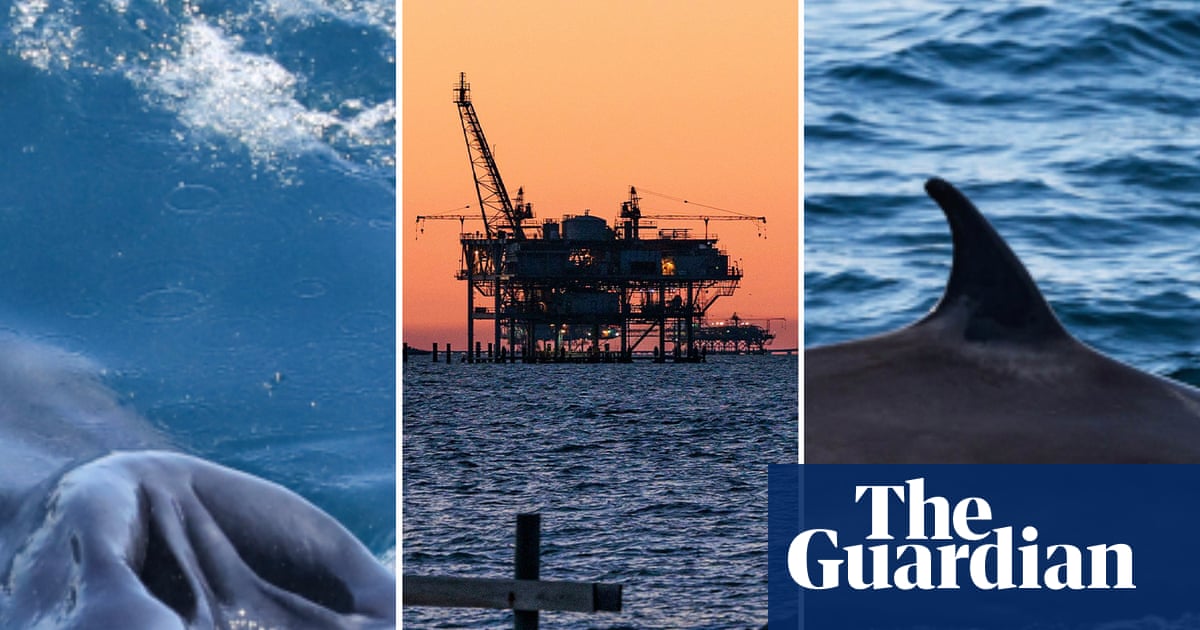
Since before modern humans existed Rice’s whales have been diving to the depths of the ocean to gorge on fat-rich fish while growing to leviathan proportions, their bodies spanning the length of a bus and weighing as much as as six elephants. Unfortunately for these grand creatures, their only home became a patch of the Gulf of Mexico that the oil and gas industry, much later, became highly interested in for drilling. Only about 50 of these baleen whales still exist on Earth, surrounded by clanging aquatic highways of boats and shifting drilling infrastructure. Last week, unbeknown to the cetaceans, an existential moment arrived when the Trump administration made the extraordinary decision to scrap all protections for the Rice’s whale, along with other endangered marine life in the gulf, in service of an industry that has facilitated the overheating of our oceans and our atmosphere. It may result in the first extinction of a whale species in North American waters in 300 years. “Nothing surprises me with this administration but if I was still capable …

Our extinct Australopithecus relatives may have had difficult births

Our extinct Australopithecus relatives may have had difficult births

Illustration of a female Australopithecus sediba carrying an infant JOHN BAVARO FINE ART/SCIENCE PHOTO LIBRARY Childbirth was difficult and dangerous for our ape-like ancestors, much as it is for women today. A new study of the pelvises of Australopithecus suggests that labour exerted powerful forces on their pelvic floors – meaning Australopithecus mothers risked perineal tearing. “We show that Australopithecines are quite similar to modern humans,” says Pierre Frémondière, a midwife at Aix-Marseille University in France. “If they had lots of deliveries, probably they would have a greater risk of pelvic floor disorder.” For modern humans, vaginal childbirth requires a lot of force, as a large-headed baby is forced through a relatively narrow pelvis. One region that is prone to damage is the pelvic floor, a sheet of muscles that links the left and right halves of the pelvis. Many women tear their pelvic floor during labour, and it’s been estimated that 1 in 4 women experience pelvic floor disorders such as incontinence or organ prolapse. Frémondière and his colleagues wanted to find out if …

Two marsupials believed extinct for 6000 years found alive

Two marsupials believed extinct for 6000 years found alive

A pygmy long-fingered possum Flannery et al Two marsupial species that scientists thought had gone extinct at least 6000 years ago have been found alive on the island of New Guinea. The ring-tailed glider and pygmy long-fingered possum, previously known to science only from fossils found in Australia, have now been found and photographed in the Vogelkop peninsula in Papua, Indonesia, with the help of local Indigenous communities. Tim Flannery at the Australian Museum in Sydney says it took him and his colleagues many years of detective work to confirm that the animals are, in fact, back from the dead, involving tantalising sightings, misidentified museum specimens and the recovery of sub-fossil remains. Recent photographic evidence and close work with local communities have finally allowed researchers to confirm the animals are actually alive, but their habitat faces grave threats from logging. Scientists know little of their exact range and ecological needs, posing challenges for their conservation. Scott Hucknull at Central Queensland University in Australia, who wasn’t part of the team, says the discoveries are “more important …

Matthew Kelly: ‘Something extinct I’d bring back to life? Wokeness – a good thing that’s been hijacked’ | Life and style

Matthew Kelly: ‘Something extinct I’d bring back to life? Wokeness – a good thing that’s been hijacked’ | Life and style

Born in Lancashire, Matthew Kelly, 75, studied drama at Manchester Polytechnic and acted at the Liverpool Everyman. He moved into TV, presenting Game for a Laugh in the 80s, You Bet! in the 90s and Stars in their Eyes from 1993 to 2004. Having returned to the stage, he received an Olivier award in 2004 for his role in Of Mice and Men in London’s West End. He stars in Waiting for Godot at Glasgow’s Citizens theatre from 20 February to 14 March, then takes the play to Liverpool and Bolton. He has two children and lives in London. What is your greatest fear?Not being able to work. What is the trait you most deplore in yourself?Intolerance. What is the trait you most deplore in others?Intolerance. Aside from property, what’s the most expensive thing you’ve bought?Insurance – it’s such a scam. What is your most treasured possession?My freedom pass. Describe yourself in three wordsFriendly, opinionated, hilarious. What makes you unhappy?Very little. I’m always, “Hello birds, hello trees, aren’t we having a lovely time?” What do you most dislike …

Giant Prototaxites fossil reveals an extinct branch of complex life on Earth

Giant Prototaxites fossil reveals an extinct branch of complex life on Earth

Over 150 years ago, a fossilized organism known as Prototaxites emerged as an enigma regarding what early land life may have been like. As an organism that appeared to grow up through Earth’s crust in the form of a large column (or pillar) between 420 and 370 million years ago, Prototaxites was one of the largest terrestrial (land) organisms of its time. Some samples reached an estimated height of 8 m (25 ft) in length. Characteristics of Prototaxites include the absence of flowers, leaves, stems, and root systems. Instead, their structure consisted of smooth, pillar-like trunks that were likely anchored into the soil through a swollen root base. Since Prototaxites was discovered in the mid-1800s, there has been disagreement among scientists regarding what type of organism this was. Some proposed it was a large fungus. Others suggested a type of algae or plant, while others believed it was a lichen-like mutualism between two different types of organisms. New findings from researchers affiliated with several universities now suggest that Prototaxites is a member of a previously …