All posts tagged: Birds

Zebra finch neurons offer new clues about learning, repair, and human brain limits

Zebra finch neurons offer new clues about learning, repair, and human brain limits

A zebra finch can fit in the palm of your hand, but its brain is doing something that looks almost unruly. Inside one part of the adult songbird brain, newly formed neurons do not politely weave around older cells as they settle into place. Instead, they appear to push through crowded tissue and press into neighboring neurons. They bend nearby structures and, at times, seem to carve tunnels through tightly packed cell groups. That unexpected behavior, described by researchers at Boston University, offers a striking new look at how adult brains in some animals keep adding neurons long after birth. The work centers on neurogenesis, the process by which neurons are born, migrate, mature, and join existing brain circuits. In most mammals, that ability is sharply limited after birth. Birds, fish, and reptiles are different. Their brains continue to refresh themselves, and zebra finches are especially good at it. That makes them valuable for studying a basic puzzle. If some animals can keep adding neurons to adult brains, how do those cells actually move through …

People Who Put Up Bird & Squirrel Feeders In Their Yards Usually Share 11 Rare Personality Traits

People Who Put Up Bird & Squirrel Feeders In Their Yards Usually Share 11 Rare Personality Traits

People who put up bird and squirrel feeders in their yards usually aren’t doing it just for decoration or entertainment. Taking the time to feed backyard wildlife tends to reflect rare personality traits such as empathy, patience, and genuine concern for small animals that many others overlook. It’s an unassuming, often overlooked habit, but it says a lot about how someone feels responsible for the living things sharing their space. More than anything, keeping feeders stocked shows a deep love for animals and a natural instinct to nurture. People who do this regularly tend to notice their surroundings more closely, appreciate quieter moments, and stay committed to caring for something outside themselves. Here are the rare personality traits many of these bird and squirrel feeders share. People who put up bird and squirrel feeders in their yards usually share 11 rare personality traits: 1. They’re open-minded and curious about the world around them Rido | Shutterstock People who put up bird and squirrel feeders tend to stay curious about what’s happening outside their window. They …

Hawaiian forest birds are stealing each other’s twigs

Hawaiian forest birds are stealing each other’s twigs

Get the Popular Science daily newsletter💡 Breakthroughs, discoveries, and DIY tips sent six days a week. Birds in Hawaii are stealing from each other, and this bird-on-bird crime even extends to members of the same species. It’s an example of kleptoparasitism, or when an animal steals things from another. Specifically, these colorful, winged kleptoparasites are pilferring nest-material, sometimes causing the demise of the depleted nest.  Researchers documented this behavior while observing over 200 native canopy-nesting birds nests on the island of Hawaii—aka the Big Island. The birds included the apapane (Himatione sanguinea), the i‘iwi (Drepanis coccinea), and the Hawai‘i amakihi (Chlorodrepanis virens). Though there has been anecdotal evidence of such theft, a study recently published in The American Naturalist represents the first instance of it being tracked and quantified in nature. “People working in the field have seen this behavior for years, but it’s never been documented at this level,” Erin Wilson Rankin, lead-author of the study and an entomologist at University of California, Riverside (UCR), said in a statement. “Now we can say who’s …

Coolfly Aura Review: More Angles, Fewer Advantages

Coolfly Aura Review: More Angles, Fewer Advantages

Assembly was quick and tool-free, requiring only a handful of included knob screws. I also like that it included both fence- and pole-mounting options, the latter of which is critical for preventing squirrel damage. ScreenshotCoolfly app via Kat Merck Smart feeder companies continue to upgrade their cameras’ quality with each new model, but the general range still seems to be anywhere from 1080p photos and 2K video on the low end (as with the Birdfy Lite), all the way up to 32-MP photos and 4K video (as with Camojojo’s new Hibird Pro). The Aura falls somewhere in the middle of this range, with 4-MP photos and a respectable 2.5K Ultra HD video. The camera’s 150-degree field of view is wider than that of a typical bird feeder camera, and it helps to capture all angles of what’s really the Aura’s signature feature—a wraparound perch with little platforms on the left and right sides, where you can position the camera upright (which shows pictures in a horizontal “landscape mode”) at the angle you prefer. If you …

How to protect British birds from avian diseases this summer

How to protect British birds from avian diseases this summer

Brits are being urged to take down bird feeders this summer to help protect vulnerable bird species from various strains of avian diseases. According to the country’s biggest bird charity, it’s advised to avoid filling up birdfeeders, particularly during the summer months between May and October, because it can spread diseases. One of the biggest concerns, according to the Royal Society for the Protection of Birds (RSPB), is the risk of trichomonosis, which experts believe is contributing to a vast decline in greenfinches and chaffinches. It’s thought that the greenfinch population, in particular, has already decreased by 2 million, and they are now considered endangered. According to bird experts, bird feeders full of seeds might be one way these diseases are spreading, as food sources become contaminated with the saliva and poo of infected birds. Here’s everything you need to know and what you can do to help British birds this summer. Jacek Stankiewicz / Comedywildlife What is trichomonosis in birds? Trichomonosis is a disease caused by the parasite Trichomonas gallinae. The parasite attacks the …

Golden eagles could be reintroduced to England after more than 150 years | Birds

Golden eagles could be reintroduced to England after more than 150 years | Birds

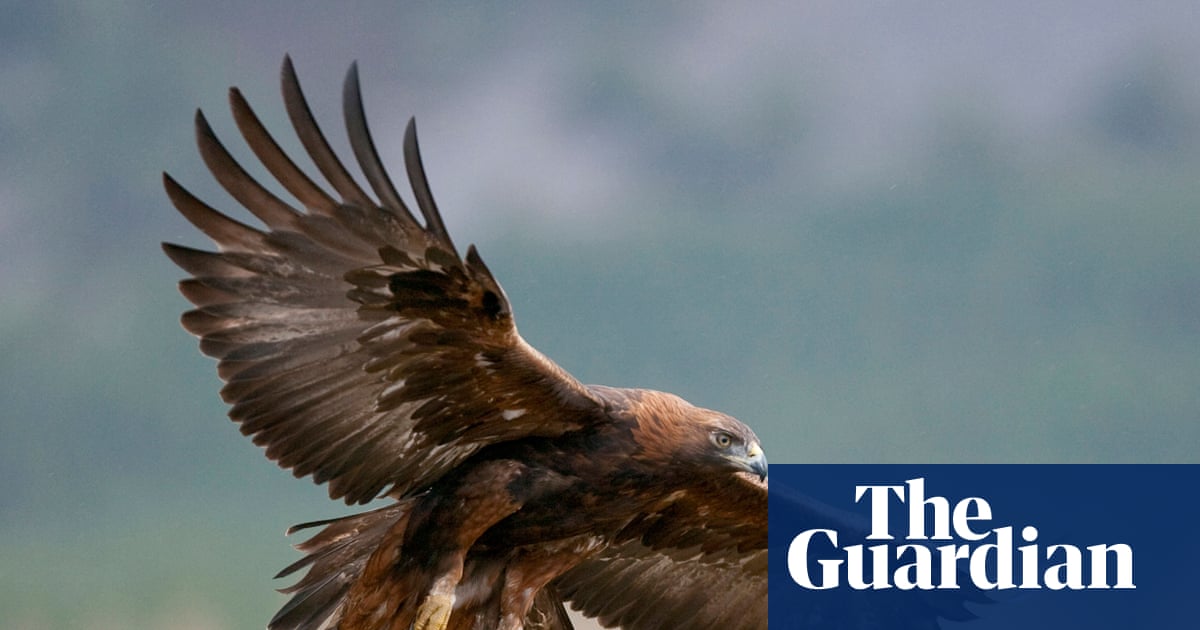
“The world is grown so bad that wrens make prey where eagles dare not perch.” So wrote Shakespeare in Richard III, in a line of social commentary that feels ever more relevant with age. A note of good news then, in a world of so much bad, that the eagles the Bard was probably referring to could finally be reintroduced to England after more than 150 years. The golden eagle, which was common in Shakespearean England – and which he mentioned more than 40 times, according to some scholars – has been largely absent from the country’s skies, with only a handful of pairs seen in the past 150 years. The majestic bird of prey with a 2-metre wingspan has been effectively extinct in England since the last native golden eagle is thought to have died in 2015, having lived alone in the Lake District. Their decline was largely due to centuries of persecution from gamekeepers and farmers, who viewed them as a threat to lambs and game birds. They are occasionally seen in areas …

Gardeners must stop making 6 big mistakes or ‘birds will go elsewhere’ | UK | News

Gardeners must stop making 6 big mistakes or ‘birds will go elsewhere’ | UK | News

Gardening and bird watching often go hand-in-hand with the feathered visitors bringing joy to many a British home, but experts say there are six things to avoid if you want to attract more avians. According to Professor Donald K. Price, an ornithologist and professor of biology at the University of Nevada, Las Vegas, birds are similar to humans in that they often seek somewhere with food, shelter and water in order to make a home. Professor Price told Good Housekeeping magazine: “If your yard doesn’t have anything to offer birds, they are likely to go somewhere else, to other yards, or into the open or wooded areas nearby.” Below are the professor’s tips on what to avoid if you want to attract more birds to your garden. It seems simple but if there is no food then birds will likely go elsewhere, either another garden or a wild place where they can find it. Food doesn’t have to be from a bird feeder, a variety of flowering plants and berry-producing trees and shrubs can still …

Robot birds deployed in Grand Teton National Park for sexy time

Robot birds deployed in Grand Teton National Park for sexy time

Get the Popular Science daily newsletter💡 Breakthroughs, discoveries, and DIY tips sent six days a week. Spring is here, and that can only mean one thing: the return of robot birds. In Wyoming’s Grand Teton National Park, rangers and conservationists are once again deploying specially designed robotic decoys of the greater sage-grouse (Centrocercus urophasianus) in a bid to encourage breeding. Although they may not exactly look like the real thing to human park visitors, ecologists hope the robo-birds can convince the region’s dwindling grouse population to start reproducing. . The greater sage-grouse is a prime example of the consequences of habitat loss. Around 16 million of the chicken-sized birds lived across North America at the beginning of the 20th century. Ecological surveys now indicate that by the late 1960s, grouse populations in the West began to decline an average of 2.3 percent every year. While the species as a whole isn’t endangered, populations in areas like Grand Teton National Park are at serious risk of completely disappearing. At one of the park’s breeding sites—known as …

Bird Feeding Can Harm Some Species: 6 Ways To Do It Safely

Bird Feeding Can Harm Some Species: 6 Ways To Do It Safely

Birdfeeding feels like a pretty noble thing. The UK’s bird population has, after all, declined by almost a fifth since the ’70s, and it’s true that many sadly starve in the barren, colder months. But the Royal Society for the Protection of Birds (RSPB) said that birdfeeding isn’t as straightforwardly good for all species as you might hope. Following the results from this year’s The Big Garden Birdwatch, the charity saw that greenfinch populations seem to have declined by 67% since the programme began in 1979. They are now on the UK Red List in the Birds of Conservation Concern. One of the reasons could be partly influenced by your birdfeeders, they said. Why might bird feeders hurt some bird species? Greenfinch populations are shrinking for many reasons, but one of the biggest ones is trichomonosis, a disease that spreads easily from bird to bird at feeders. Speaking to HuffPost UK, an RSPB spokesperson said: “Our research shows that large numbers of birds congregating around feeders can increase the chances of disease transmission.” This is …