All posts tagged: caregivers

11 Signs Your Aging Parents Actually Need You To Start Parenting Them A Little Bit

11 Signs Your Aging Parents Actually Need You To Start Parenting Them A Little Bit

Shifting roles from cared-for to caregiver can be a complex, nuanced experience for adult children to navigate as their parents get older. However, taking an optimistic approach in order to “make the best of it” can have significant value for everyone involved. Your aging parents may not tell you directly when they actually need you to start parenting them a little bit, but learning how to spot when that moment has arrived can make all the difference. If the time has arrived when your mom and dad truly need you to step up and start being the one to care for them, there will be several subtle signs you notice when you visit their home, speak with them on the phone, or talk with them about what’s going on with them. Here are 11 signs your aging parents actually need you to start parenting them a little bit 1. Their living spaces feel chaotic Krakenimages.com | Shutterstock.com If you walk into your parents’ living space and the first thing you notice is chaos, chances are …
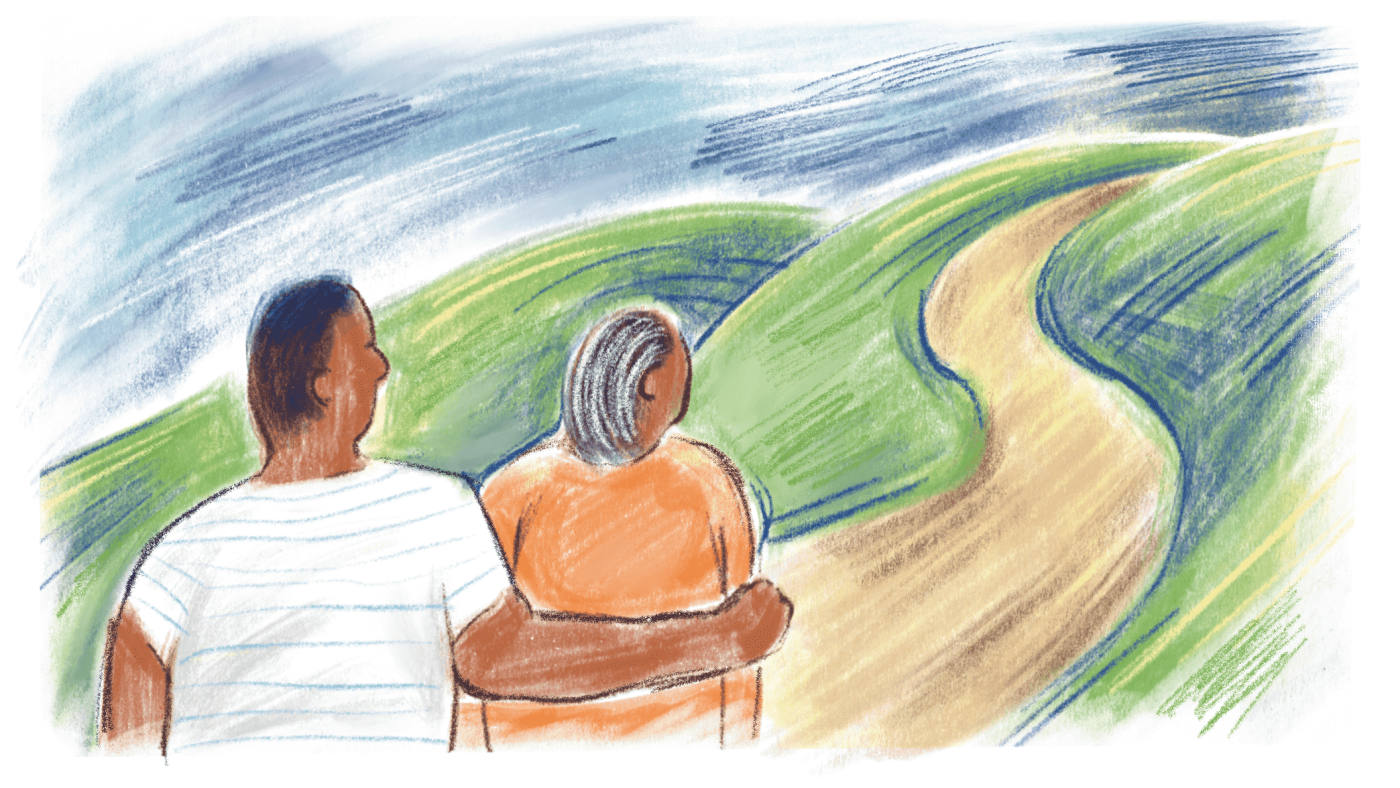
‘What if I die first?’ Making a plan is key for family caregivers. Here’s how : NPR

‘What if I die first?’ Making a plan is key for family caregivers. Here’s how : NPR

Noreen Vance ‘s beloved sister Angela has severe Down syndrome and needs help with daily life. Their mother cared for her for decades but refused to confront the possibility that she might die before her daughter. Vance tried to talk about the future, but her mom just shut the conversation down. So there was no plan in place when their mother had a major stroke. Because of the brain injury, she couldn’t understand how impaired she was, and didn’t want to let go of caregiving even though she couldn’t manage it anymore. Family chaos ensued. And Angela’s care took years to sort out. The number one thing that worries family caregivers for adults with an intellectual or developmental disability isn’t money or safety. It’s the future. In a recent study, 72% of caregivers for people with Down syndrome said they worried about the long-term, and 68% were worried about what would happen after their own death. It’s an especially acute concern for the families of people with Down syndrome, because people with the genetic condition …

Her dad’s dementia inspired her to guide family caregivers : NPR

Her dad’s dementia inspired her to guide family caregivers : NPR

Wambūi Karanja of Kenya accepts the “One to Watch” award from the Alzheimer’s Association for the guide she’s developed to help family caregivers. Skywall Photography hide caption toggle caption Skywall Photography When Wambūi Karanja’s friends gripe about the annoying habits of their fathers, she feels out of sync. “I [can’t] stand listening to my friends complain about their dads, because I don’t get to experience my dad the same way you get to experience yours,” she says. “It’s a very lonely thing.” When she was a teenager growing up in Nairobi, Kenya, Karanja’s family got devastating news. Her dad, a teacher then in his 50s, had early onset dementia. Now 32, Karanja grieves the milestones and achievements her dad hasn’t been able to share — her graduation from college, for example, and her budding career as a researcher. But that family tragedy has given her, as she says, a “purpose.” A project manager at the Brain and Mind Institute at Nairobi’s Aga Khan University, Karanja has devoted her career to training families in the art …

Caring for the Caregivers | Psychology Today

Caring for the Caregivers | Psychology Today

Co-authored with Sharon Salzberg Caregivers are often the unseen scaffolding holding our worlds together. They provide presence, stability, and love during life’s most vulnerable moments. But what happens when the very people who hold everything together begin to unravel? This year, consider the 63 million Americans who are family caregivers—roughly one in four adults. Many are carrying out complex medical tasks without formal training, navigating a balance between selflessness and personal sacrifice. Yet, the toll of this labor rarely makes the headlines. Instead, it shows up in the long, blurred days, in conversations that center on others’ needs, and in the quiet realization that your own life now orbits around someone else’s. Whether you’re caring for a newborn, supporting a spouse through illness, or juggling a career while managing a parent’s dementia, one truth stands clear: Your well-being isn’t a luxury. It’s the very foundation that makes everything else possible. As we set goals, it’s time to make self-care a priority—because without it, everything else starts to falter. In moments of broader uncertainty—like the community …

Some Good News for Sandwich-Generation Caregivers

Some Good News for Sandwich-Generation Caregivers

Since the term “sandwich generation” was first introduced in 1981, referring to those who were caring for young children and aging parents at the same time,1 a lot has changed. In fact, you could say that the sandwich has become a double Whopper. Life expectancy has increased, so it’s often not only our young children and our parents we care for, but also grandparents and even great-grandparents who may be alive and need care. Because the cost of higher education and daily life has also increased, our grown children and their children—our grandchildren—and our partners’ parents and relatives may also need our financial help and emotional support. Anxiety about holding onto jobs, therefore, has become more likely, and self-care less likely. The hidden benefits of caregiving But here’s the good news: Despite caretaker fatigue, the financial squeeze, and role-strain guilt, most of my patients tell me that all this caretaking is not having a negative effect on their psychological or physical health. Research findings suggest the same conclusion.2 In fact, there seem to be many …

5 Reasons Caregivers Feel Guilty Without Wrongdoing

5 Reasons Caregivers Feel Guilty Without Wrongdoing

Caregiving carries a quiet contradiction. You can do everything reasonably possible for someone you love and still feel guilty. Not because you failed, but because caring places you close to suffering in a way that logic alone cannot undo. Guilt plays a complicated role here. In small doses, it can reflect care and commitment. It keeps people attentive and emotionally invested. But when guilt becomes untethered from actual control or wrongdoing, it starts to take a toll. Many caregivers find themselves worn down by self-criticism, emotional exhaustion, and a persistent sense of having fallen short, even when nothing more could have been done (Schulz and Sherwood, 2008). This kind of guilt is not really about blame. It grows out of how responsibility, love, and identity collide when someone else’s well-being matters deeply to you. Here are five reasons caregivers so often feel guilty, even when they have done nothing wrong. 1. Responsibility does not end just because control does Responsibility and control feel inseparable, but psychologically, they are not. Even when caregivers understand that they …

Family support is key for people with mental illness but caregivers need help too : NPR

Family support is key for people with mental illness but caregivers need help too : NPR

After caring for his brother, who has schizophrenia, for many years Mitul Desai started a company to support caregivers like him. José A. Alvarado Jr. for NPR hide caption toggle caption José A. Alvarado Jr. for NPR For years, Mitul Desai felt that the best way to deal with his little brother’s schizophrenia was to avoid talking about it. His brother had become angry and withdrawn during his first year in college in 1996, and then started hearing and seeing things that weren’t there. Over four years doctors told the family he had everything from alcoholism to bipolar disorder, until finally he got the correct diagnosis. It was chaotic and frightening. There were also emergencies — major arguments, trips to the hospital, that time they had to convince the neighbors not to call the police. Desai compartmentalized. During these years, he focused on the brilliant career he was building as an intellectual property attorney, Wall Street analyst and senior adviser at the State Department. From the office he helped his family by navigating the health …

Policy relief for family caregivers seems stalled out. But there are signs of change : NPR

Policy relief for family caregivers seems stalled out. But there are signs of change : NPR

The Care Can’t Wait coalition has advocated for federal support for family caregivers, including advocating for the Build Back Better bill in 2021. Paul Morigi/Getty Images for Unbendable Media hide caption toggle caption Paul Morigi/Getty Images for Unbendable Media In early December, Andy Kim walked onto the Senate floor to give his first solo speech. By tradition, this is a formal introduction, the chance for a new congressperson to announce what he stands for. Kim, a Democrat from New Jersey, told the story of his father’s diagnosis of Alzheimer’s disease just a few weeks prior. After the appointment, Kim said he sat in his car in shock, replaying the words of the doctor who warned him that his next year was going to be hell. Kim said the costs of care have already been “catastrophic” for his family. “Why is it so hard to provide care in this country?” he asked. “Why is providing care so insanely complicated?” The takeaway: Family caregiving is so difficult that even a U.S. senator is overwhelmed. And even a …