All posts tagged: chimps

Is war central to human nature? Chimps can’t tell us everything

Is war central to human nature? Chimps can’t tell us everything

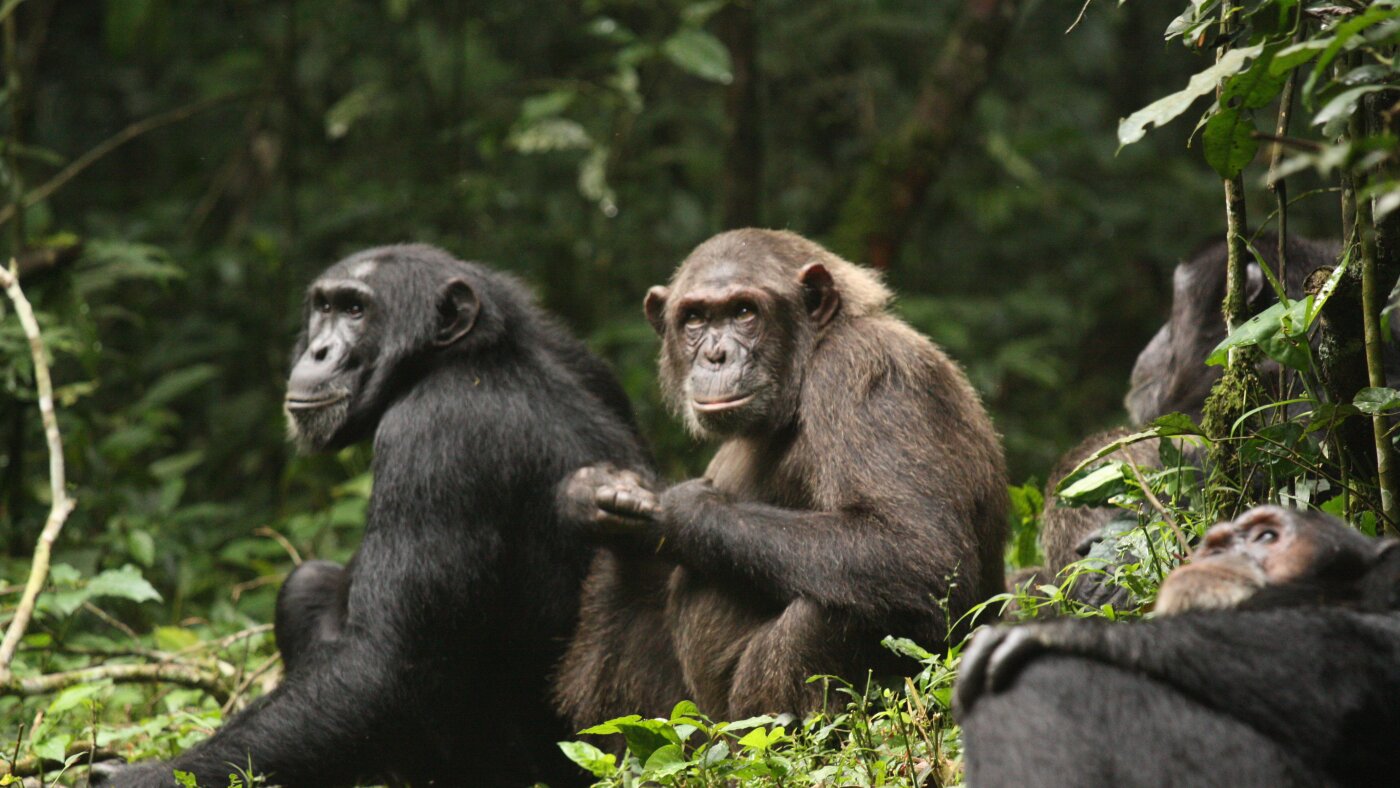
For decades, the 200 Ngogo chimpanzees in Kibale National Park, Uganda, lived what seemed a calm and normal existence. Males and females hunted together, groomed each other and went on patrols through the forest. Within this large group, cliques were formed but they often intermingled and share territory, like something from a simian Pixar film. But in June 2015, something happened and the group split in two. Then, the violence started. The scientists watching this schism aren’t sure why things became so belligerent. It started with members from one group chasing the other and prolonged periods of avoidance. As polarization increased, so did the aggression, eventually becoming lethal. Over the years, at least six adult males were targeted, followed by at least 17 infants that were killed. What was surprising about these killings isn’t that chimpanzees are some sort of primate pacifists and these ones suddenly went rogue. Indeed, chimps have been documented killing each other before, but usually one-off in events rather than in conflict between distinct groups that were formerly united. What made …
How the world’s largest known group of chimps turned on each other : NPR

How the world’s largest known group of chimps turned on each other : NPR

The Ngogo chimpanzee group in Uganda’s Kibale National Park is the largest known community of wild chimpanzees in the world. Over the last decade, it has split into two distinct groups that are hostile to each other. Aaron Sandel hide caption toggle caption Aaron Sandel In the mid-1970s, more than a decade into her research on chimpanzees in Tanzania’s Gombe National Park, the late and legendary primatologist Jane Goodall witnessed something that horrified her. The group of chimps she and her colleagues were studying broke into two factions and turned on each other. It looked very much like a civil war. Chimpanzees that had intermingled peacefully and grown up together were systematically killing each other. It changed Goodall’s view of one of humanity’s closest relatives. “I used to think, ‘Well, they’re very [much] like people but nicer,’” she told the public radio program Fresh Air in 1993. “And then I realized that when opportunity arises, they have this nasty, brutal side to them just like we do.” Asked what precipitated the war, Goodall said it …

What happened to Bubbles? Chimp’s life after Michael Jackson revealed

What happened to Bubbles? Chimp’s life after Michael Jackson revealed

He has taken tea with the Mayor of Osaka, starred in a pop video alongside Elizabeth Taylor and took part in a concert tour that set a record as the most successful ever staged. But for Bubbles the chimpanzee, once a pet of the late pop star Michael Jackson, it is his current lifestyle at an ape sanctuary in central Florida that allows him to live his best life. © Center for Great ApesBubbles is now living a peaceful life at the sanctuary He is now among fellow chimpanzees, exploring the sanctuary’s aerial tramway and producing abstract paintings. Patti Ragan, founder and president of the Center for Great Apes in Wauchula, firmly believes that Bubbles is more content than ever. At 43, he is an elder statesman of the sanctuary, having lived beyond the average 33-year life expectancy of male chimps in captivity. “Bubbles today is one of the ‘seniors’ here,” Patti says in an exclusive interview with HELLO!. “Like most elderly individuals, he likes to relax, be groomed by his friends, take a couple …

Chimps’ taste for fermented fruit hints at origins of human love of alcohol : NPR

Chimps’ taste for fermented fruit hints at origins of human love of alcohol : NPR

Researchers collected and analyzed urine from chimpanzees in a Ugandan forest after they’d eaten fermented fruit to determine how much alcohol they’d consumed. Sharifah Namaganda hide caption toggle caption Sharifah Namaganda For 11 days in late summer 2025, Aleksey Maro found himself in the Ugandan rainforest, doing whatever he could to collect chimpanzee urine. “The most consistent, predictable time is in the morning. Just like people, the first thing they do when they wake up is they go pee,” says Maro, a Ph.D. student in integrative biology at the University of California, Berkeley. Now, in a study published recently in Biology Letters, Maro and his colleagues explained what those urine samples reveal: Chimpanzees appear to consume a fair amount of alcohol when eating ripe, fermenting fruit. The findings may tell us something about human evolution. “In primates,” says Maro, “it could be that when you smell alcohol, that means that’s where the sugars are.” In other words, the scent of fermentation might be a shortcut to more calorie-dense food. Maybe it’s this tendency to associate …

As toddlers, chimps are major risk takers

As toddlers, chimps are major risk takers

Toddlers are the daredevils of the chimp world. Those 2 to 5 years old are more likely than older chimps to free-fall from treetops or leap wildly from branch to branch. Past age 5, such dangerous behaviors decrease by about 3 percent each year. Researchers shared these new observations in January in iScience.  Among humans, teens are the real daredevils. Compared to younger children, for instance, they’re more likely to break bones or die from injuries. Kids might want to behave as recklessly as chimp toddlers but rarely get the chance. Parents and caregivers are likely to put a stop to such fun — and the risk of broken bones — among human toddlers. “If humans scaled back their oversight, our kids would be way more daredevilish,” says biologist Lauren Sarringhaus. An author of the new study, she works at James Madison University in Harrisonburg, Va. No monkeying around Human and chimp caregivers show different patterns. Chimp moms largely parent alone. Dads don’t help. Nor, typically, do grandmothers, older siblings or other group members. Youngsters cling to their moms …