


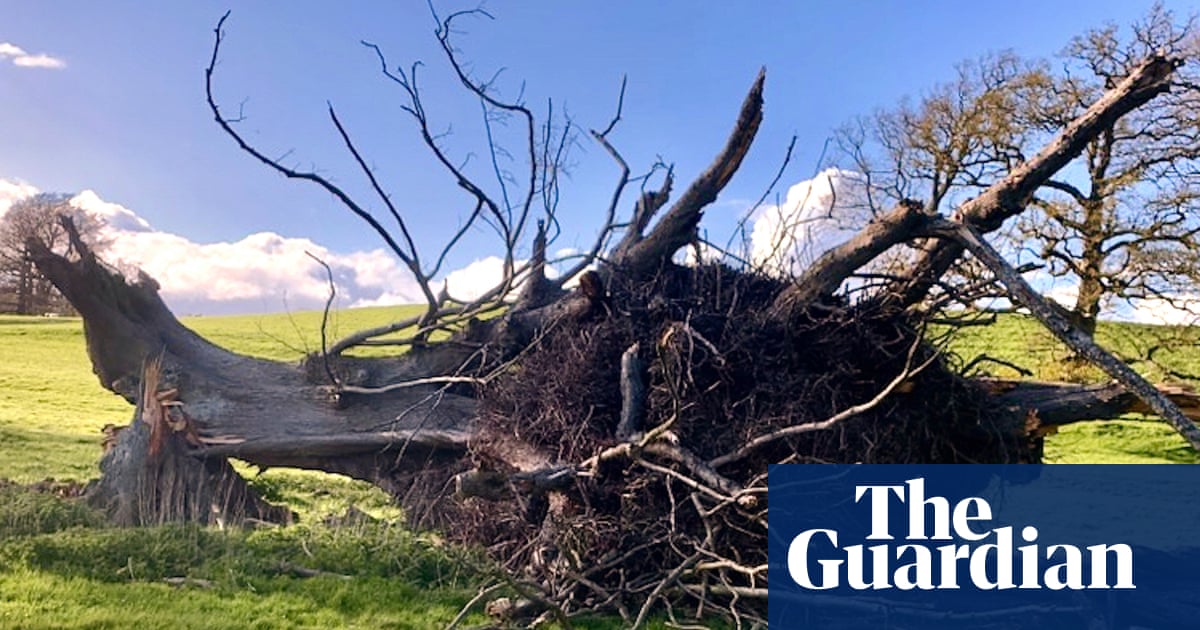
Country diary: A tree can define a landscape – even when it has fallen | Trees and forests
How quickly something that defines a landscape for centuries becomes the absence that redefines it – so it is with ancient trees. The trunk snapped like a carrot at the roots and crashed, its bony branches splintered. Now it lies like a shipwreck stranded in an open field, its hulk of twigs an animal pelt stilled. A day before, looking at its 300-year-old architecture of mostly dead wood yet so vividly alive, admiring its form and persistence through years and trouble, standing alone with spring coursing through the land and its timbers, I wondered how long, in tree time, it had left. Storm Dave answered quickly: “None.” This fallen tree is a common lime, Tilia x europaea, a hybrid of our native small-leaved lime, T. cordata, and large-leafed lime, T. platyphyllos; probably of natural origins, probably introduced, but certainly common since 17th- and 18th-century plantings. Back then it was called the Dutch lime because so many were planted from Dutch nurseries in parks, avenues, gardens and streets in the baroque style throughout Europe. This common …


