All posts tagged: morality

Incongruity, Humor, and Morality in Song

Incongruity, Humor, and Morality in Song

In the 1940s and 1950s, as part of a federal pest and rodent control program, pigeons in Boston were fed corn that had been laced with strychnine. This incident inspired Tom Lehrer to write one of his most famous (and hilarious) songs, “Poisoning the Pigeons in the Park.” In an interview with Paul D. Lehrman, Lehrer described what happened when his label, Unicorn Records, hired Richard Hayman to orchestrate the song: I will never forget the day … when Hayman came in, it was 10 in the morning, a regular union group, and they put the music in front of them, no title, no lyrics, no nothing, and they ran through it a few times and they got it. So he said okay, and I went into the booth to record, and the engineer said “Poisoning Pigeons in the Park, take one” and the piano player said “Whaat?” and literally fell off the bench. I had never seen anybody do that. They had no idea. It was just this pleasant little waltz, and they thought …

Who Is Mr. Nosy Daredevil in Nietzsche’s On the Genealogy of Morality?

Who Is Mr. Nosy Daredevil in Nietzsche’s On the Genealogy of Morality?

Published: Aug 6, 2026written by Simon Lea, PhD Philosophy Summary Mr. Nosy Daredevil represents the reader, taken on a tour of a “dark workshop” where moral ideals are fabricated. Nietzsche uses “genealogy” not “evolution” to show morality is a social institution, not a biological phenomenon. Nietzsche claims Christian morality stems from the resentment of the weak, who redefine their powerlessness as a virtue. The story is a myth created by Nietzsche to challenge Christian morality by presenting it as just another story. Show more   On the Genealogy of Morality is one of the most studied of Nietzsche’s texts. This is probably due to the fact that the text itself consists of three connected long-form essays rather than a collection of aphorisms. This makes the sudden appearance of Mr. Nosy Daredevil and his journey down into the workshop in which ideals are fabricated rather unsettling. What purpose does this strange story serve, and why did Nietzsche include it?   Why “Genealogy” and Not “Evolution” of Morality? Family Tree of the families de Cordes, de Langhe, Bouckaert, Berquyn, and Steelant by an …

Why Gilles Deleuze Preferred Spinozian Ethics Over Traditional Morality

Why Gilles Deleuze Preferred Spinozian Ethics Over Traditional Morality

Summary Deleuze champions Spinoza’s immanent ethics over transcendent morality, judging actions by their effect on one’s power to act. Spinozian ethics seeks joyful encounters that increase our capacity, rejecting morality based on sad passions like guilt and fear. The body is a site of knowledge and capacity, challenging the traditional philosophical hierarchy of mind over body. Traditional morality relies on illusions of consciousness like sin and free will to dominate people through obedience and shame. Show more   Spinoza was a significant influence on the French philosopher Deleuze. By reading Spinoza, Deleuze formulated a new theory of morality that rejects both the sad passions that often impose themselves through morality and the philosophy of transcendence that supports it. Spinoza’s Ethics offered a manual for self-guidance that rejected punishment. This is because Deleuze saw the ideas emerging from the geometrical method pioneered in Ethics as an impartial system of observations and descriptions of how bodies move and act upon one another.   Decomposing Transcendence The Dance, Henri Matisse, 1910. Source: The State Hermitage Museum, Saint Petersburg   Deleuze believes the most extraordinary achievement of …

The Allure of Morality in Forming First Impressions

The Allure of Morality in Forming First Impressions

Most of us remember the first time we met the important people in our lives: from our boss to our beau to our best friend. First impressions are surprisingly enduring, particularly when they are based on specific positive behaviors or characteristics that we uniquely remember. We all notice many of the same things initially: physical appearance, clothing, body language, tone of voice, and communication style, to name a few. Yet beyond what we see and hear is what we perceive. We feel chemistry and experience compatibility, often describing a first encounter as incredibly comfortable, “as if we had known each other for years.” Although there may be many other reasons we are drawn to certain people, due to perceived similarity, resemblance to a loved one in our lives, or good old-fashioned personality “clicking,” there is apparently an additional dimension to the attraction analysis. In addition to the many positive qualities we notice about someone else is another category with deeper, more evolutionary roots: morality. When Forming Impressions, Morality Matters Savannah Adams and Oscar Ybarra investigated …

On Free Will and Morality, Jerry Coyne Doesn’t Walk His Talk

On Free Will and Morality, Jerry Coyne Doesn’t Walk His Talk

University of Chicago biologist Jerry Coyne has now posted, at his blog, Why Evolution Is True, a reply to a talk I gave in March at the 2026 Dallas Conference on Science and Faith. In the talk, presented by Discovery Institute’s Center for Science & Culture, I discussed the reality of free will, and criticized the coterie of scientists, specifically neuroscientist Sam Harris, primatologist Robert Sapolsky, and Coyne himself, who deny it. I welcome Coyne’s reply — the free will debate is vitally important to our understanding of ourselves and of our society. I believe that we have libertarian free will. That is, we can freely choose our actions to a substantial extent. We are certainly influenced quite powerfully by emotions and motives that are not under our immediate control and sometimes overwhelm us. But we do have some degree of genuine freedom to choose how we respond to these drives. We are not meat robots. I offer four strong arguments to support that view: Everyone believes in free will. Even free will deniers do. …

COMMENTARY | Morality Gets Heavier

COMMENTARY | Morality Gets Heavier

There is peace in waking up and knowing exactly what you’re supposed to do with your day. How you’re supposed to parent. What things in life should be prioritized. I was given that on a silver platter, dressed up as a delicious plate of salvation. The Mormon Church is the key to happiness. Everyone knows that. It was easy to believe.My friends believed it.My parents adored it.And so did I. It’s a beautiful thought — that there is a father in the sky who loves me and who gave me a plan to live in peace and happiness for eternity. That if I followed the rules closely enough, I would be safe. That goodness was something I could earn through obedience. But what happens when that framework shatters? When the questions you whispered for years turn into shouts. When you can no longer reconcile that the loving God you believed in does not love the gay community, does not respect minorities, does not include them, and does not uplift women. When a quick Google search …

The US is the only country where most say fellow citizens’ morality is bad, survey finds

The US is the only country where most say fellow citizens’ morality is bad, survey finds

(RNS) — Out of 25 countries, the United States was the only one where most people said their fellow citizens’ morality was generally bad, new research has found. A Pew Research Center report examining morality and ethics, released on Thursday (March 5), also found self-identified Christians are more likely to view abortion, using marijuana, homosexuality, having extramarital affairs and other behaviors as “morally unacceptable” than other religious groups. The report marks the first time Pew researchers asked respondents about their views on the morality of their fellow citizens. In total, more than half of American adults – 53% – said the morality and ethics of people in their country were somewhat bad or very bad, while 47% rated their morality as good or very good, according to the study. Still, the findings “don’t support that Americans are overarchingly more judgmental or moralistic than in other countries” based on responses to other questions, Jonathan Evans, senior researcher at Pew, told RNS on Wednesday. Partisan politics seems to play a role in Americans’ response to that question. …

The Small Morality of Everyday Days

The Small Morality of Everyday Days

Most of the ethical debates I grew up hearing were colossal: war, climate disaster, reproductive rights, guns. They felt too vast to touch, as if morality only lived in rooms with microphones. But lately I’ve started paying attention to something quieter — the ethics of the everyday, the moral weight of small choices in ordinary light. Humanism, after all, isn’t a lecture hall philosophy. It’s a way of walking through grocery aisles, scrolling newsfeeds, saying hello to neighbors you’ll never fully know. It’s the practice of compassion scaled down to human size. The Moment That Started It It began in a checkout line last year. A woman ahead of me — maybe 70 — was short three dollars on groceries. The cashier looked embarrassed; the people behind me pretended not to notice. It wasn’t tragedy, just inconvenience. I handed her the money, a simple reflex, and she said something that hasn’t left me: “You must be one of those good church people.” I hesitated. “Something like that,” I replied, though I haven’t been religious for …

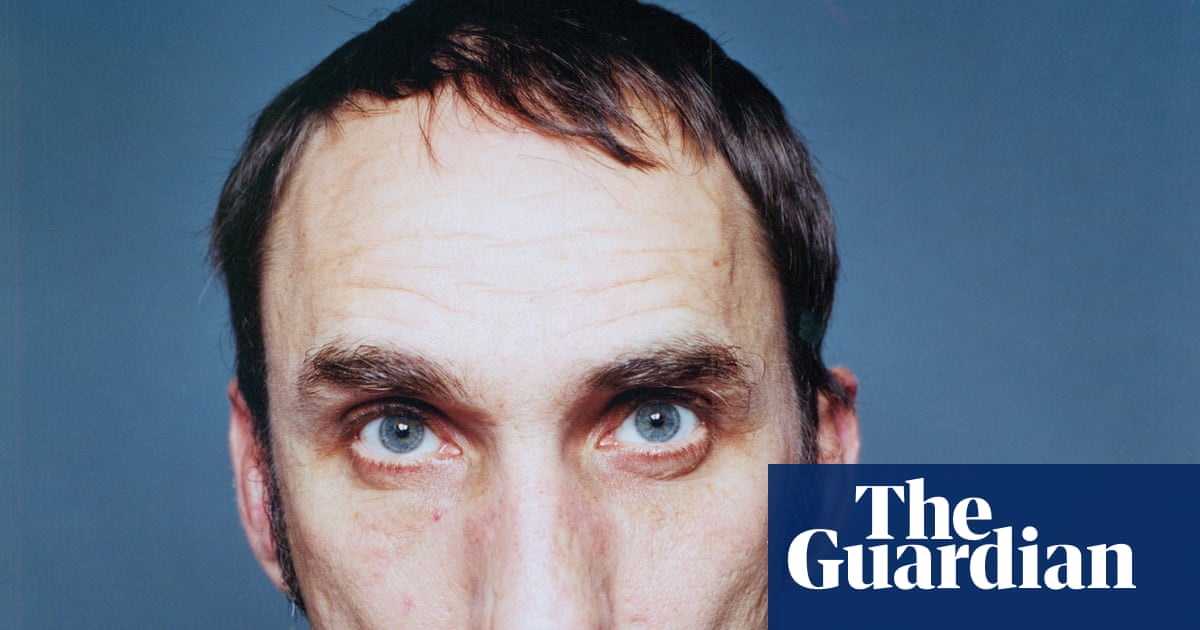
The Quantity Theory of Morality by Will Self review – raucously inventive state-of-the-nation satire | Will Self

The Quantity Theory of Morality by Will Self review – raucously inventive state-of-the-nation satire | Will Self

In Will Self’s 1991 debut collection The Quantity Theory of Insanity, an art therapist named Misha Gurney finds himself involuntarily sectioned in the psychiatric hospital where he is employed. In the title story, Misha’s father is revealed as a friend and early associate of the hospital’s chief psychiatrist Zack Busner, a recurring character in Self’s fiction until the present day. In his first incarnation, Busner is engaged in testing the titular theory, by whose metric “the surface of the collective psyche was like the worn, stripy ticking of an old mattress. If you punched into its coiled hide at any point, another part would spring up – there was no action without reaction, no laughter without tears, no normality without its pissing accompanist.” Outlandish? Maybe not. However plausible or implausible the theory itself, The Quantity Theory of Insanity was an enthralling work, the announcement of a talent that has continued to reinvent the concept of narrative fiction even as it gloomily advertises its demise. Thirty-five years on, Self augments his earlier hypothesis with The Quantity Theory of …