


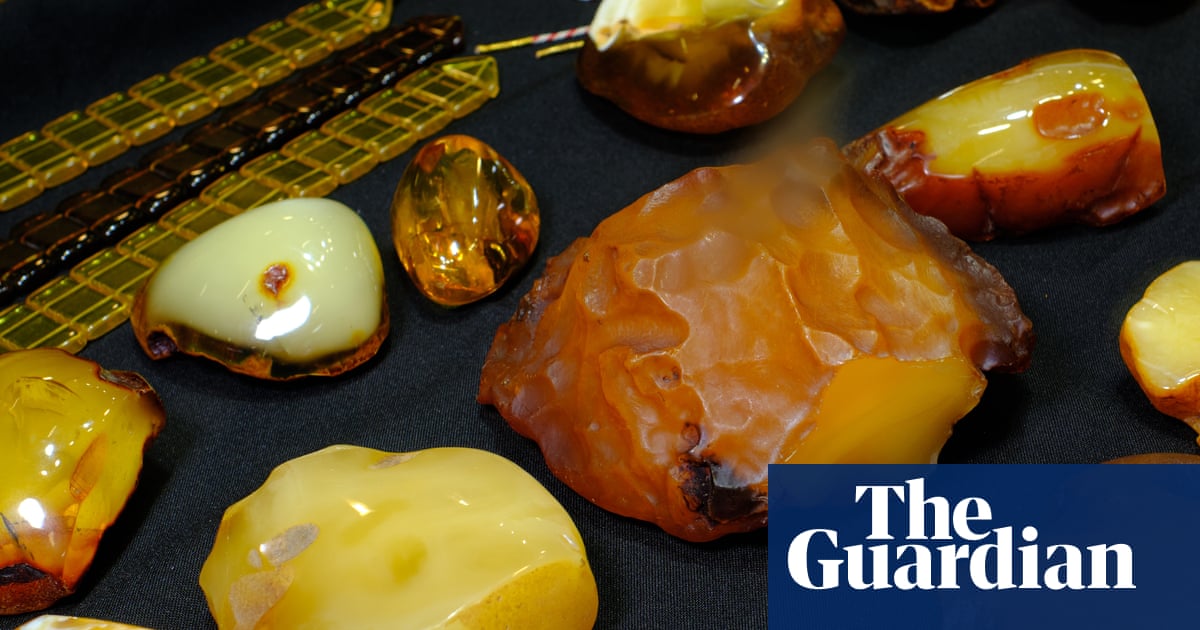
Amber rush: spring storms bring semiprecious stones to British coast | North Yorkshire
Storms can be good news for beachcombers, bringing not just driftwood and weed to shore but, occasionally, semiprecious stones. Amber is fossilised tree sap dating back more than 35m years. It is common in the Baltic and rare in Britain – though sometimes pieces do reach our shores. After being transported by rivers and glaciers, amber lies trapped in boulder clay at the bottom of the North Sea. Bad weather churns up the seabed, erodes the clay and shifts the amber, which eventually washes up in England. The area between Felixstowe and Southwold in Suffolk is known as the amber coast for the number of pieces found there after spring gales. Jet is also a tree remnant, more than 180m years old, formed by the fossilisation of waterlogged wood in sea mud. Again, the wave action from storms uncovers and transports submerged jet to the shoreline. Violent storms and high tides often bring pieces of jet ashore on the North Yorkshire coast near Whitby. In both cases, this movement occurs because, owing to their organic …


