All posts tagged: Visual

How the “Netflix Movie” Turns Cinema into “Visual Muzak”

How the “Netflix Movie” Turns Cinema into “Visual Muzak”

When Net­flix launched around the turn of the mil­len­ni­um, it was received as a god­send by many Amer­i­can cinephiles, espe­cial­ly those who lived nowhere near diverse­ly pro­grammed revival hous­es or well-curat­ed video stores. A quar­ter-cen­tu­ry lat­er, it’s safe to say that those days have come to an end. Not only does the stream­ing-only Net­flix of the twen­ty-twen­ties no longer trans­mit movies on DVD through the mail (a ser­vice its younger users have trou­ble even imag­in­ing), it ranks approx­i­mate­ly nowhere as a pre­ferred cinephile des­ti­na­tion. That has to do with a selec­tion much dimin­ished since the DVD days — espe­cial­ly as regards movies more than a decade or so old — but also with a brand debased by too many bland, for­mu­la­ic orig­i­nal pro­duc­tions. Unlike the plat­for­m’s var­i­ous acclaimed mul­ti-episode dra­mat­ic series, the “Net­flix movie” com­mands no crit­i­cal respect. But it can, at least if you trust the com­pa­ny’s own view­er­ship data, com­mand a large audi­ence, if not an espe­cial­ly atten­tive one. The gen­er­al semi-engage­ment of Net­flix view­ers, as argued in the Nerd­stal­gic video at the …

Why shiny flowers are rare: bee vision reveals a hidden visual trade-off

Why shiny flowers are rare: bee vision reveals a hidden visual trade-off

Nature’s most dazzling colors can be strangely rare. Walk through a park or forest and you see greens, yellows and reds that feel soft to the eye. Most of those tones are matte. Only now and then do you spot a buttercup petal or beetle shell that flashes like polished metal. That contrast caught the attention of evolutionary biologist Casper van der Kooi. He wanted to know why glossy colors are uncommon, and what that means for the animals that rely on color to survive. So he turned to bees, artificial flowers and a simple question that leads to a surprisingly deep answer. Matte Signals and a Stable World In your mind, picture a daisy, a great tit’s feathers or a small tree frog. Their colors stay steady as you move around them. Matte surfaces scatter light in many directions, so the shade looks almost the same from every angle and in most lighting. The researchers tested the impact of shininess on visibility for bumblebees in an experimental cage. Full cage left, on the right, …

The Greek Mythology Family Tree: A Visual Guide Shows How Zeus, Athena, and the Ancient Gods Are Related

The Greek Mythology Family Tree: A Visual Guide Shows How Zeus, Athena, and the Ancient Gods Are Related

It was long ago that poly­the­ism, as the sto­ry comes down to us, gave way to monothe­ism. Human­i­ty used to have many gods, and now almost every reli­gious believ­er acknowl­edges just one — though which god, exact­ly, does vary. Some pop­u­lar the­o­ries of “big his­to­ry” hold that, as the scale of a soci­ety grows larg­er, the num­ber of deities pro­posed by its faiths gets small­er. In that scheme, it makes sense that the grow­ing Roman Empire would even­tu­al­ly adopt Chris­tian­i­ty, and also that the gods it first inher­it­ed from the city-states of ancient Greece would be so numer­ous. Through our mod­ern eyes, the var­i­ous immor­tals invoked so read­i­ly by the Greeks look less like holy fig­ures than a cast of char­ac­ters in a long-run­ning tele­vi­sion dra­ma. Or maybe it would have to be a soap opera, giv­en that most of them belong to one big, often trou­bled clan. Hence the struc­ture of Use­fulCharts’ Greek Mythol­o­gy Fam­i­ly Tree, explained in the video above. Also avail­able for pur­chase in poster form, it clear­ly dia­grams the rela­tion­ships between …

The House | “A magnificent visual experience”: Baroness Blackstone reviews ‘Marie Antoinette Style’

The House | “A magnificent visual experience”: Baroness Blackstone reviews ‘Marie Antoinette Style’

V&A: Marie Antoinette Style | © Victoria and Albert Museum, London 4 min read18 December Startling, absurd and even touching, the V&A’s exhibition is opulent and imaginatively displayed – but it fails in its attempt to reframe Marie Antoinette as an early celebrity style icon How many French queens are there whose name we can remember? Very few, I suspect, as there were no French equivalents to Elizabeth I or Victoria. How many have we even heard of? There is one exception: we have all heard of Marie Antoinette, the wife of Louis XVI, who was guillotined during the French Revolution along with key figures from the king’s court, many aristocrats, and Antoinette herself. Her grisly end, and her personal unpopularity that preceded it, may be the main reasons why we are aware of her. Antoinette à la rose, by Élisabeth-Louise Vigée Le Brun, 1783 | Image: © Château de Versailles, Dist. Grand Palais RMN / Christophe Fouin Most of us are also aware of her fate as part of a dynastic …

A Visual Timeline of World History: Watch the Rise & Fall of Civilizations Over 5,000 Years

A Visual Timeline of World History: Watch the Rise & Fall of Civilizations Over 5,000 Years

In the video above, Use­fulCharts cre­ator Matt Bak­er sug­gests that we not refer to the peri­od span­ning the fifth and the late fif­teenth cen­turies as the “dark ages.” In jus­ti­fi­ca­tion, he does­n’t put forth the argu­ment, now fair­ly com­mon, that the time in ques­tion was actu­al­ly full of sub­tle inno­va­tion occlud­ed by mod­ern prej­u­dice. The real prob­lem, as he sees it, is that the slow­ing, if not revers­ing, of the progress of human soci­ety that we’ve tra­di­tion­al­ly regard­ed as occur­ring in what are com­mon­ly known as the Mid­dle Ages only occurred in Europe. What’s more, there have been mul­ti­ple such eras in the world: take the ear­li­er “Greek dark ages” asso­ci­at­ed with the Bronze Age civ­i­liza­tion­al col­lapse of 1177 BC. All this and more comes across at a glance on Bak­er’s Time­line of World His­to­ry, whose design is explained in the video. With char­ac­ter­is­tic Use­fulCharts clar­i­ty (also demon­strat­ed by the World Reli­gions Fam­i­ly Tree and the Evo­lu­tion of the Alpha­bet, pre­vi­ous­ly fea­tured here on Open Cul­ture), it lays out all the peri­ods of his­to­ry we may know …

A visual diary of Paris Fashion Week through the eyes of our fashion director at large

A visual diary of Paris Fashion Week through the eyes of our fashion director at large

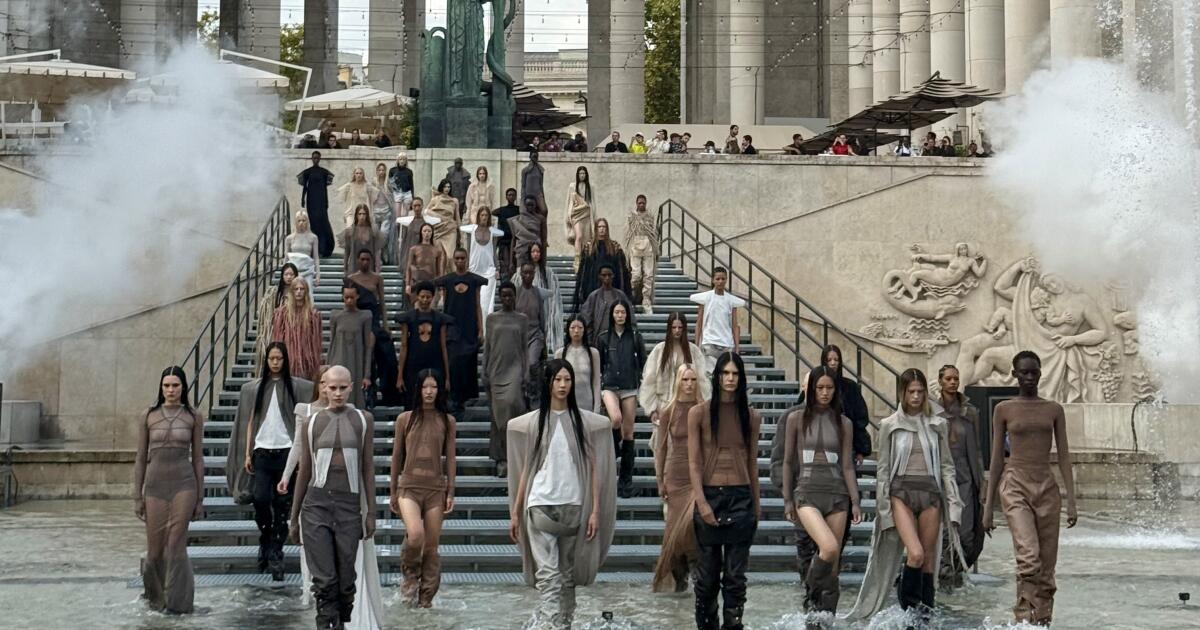
In Paris for the women’s spring/summer 2026 collections, freedom was felt. It was important for me to attend this season because getting to experience the shows and see the clothes in real life helps me understand the energy these collections carry. This season, creative directors let go of constraints and allowed for fun to take over. From Dario Vitale of Versace’s use of bold colors, embracing a completely new direction for the house. To Dior and Jonathan Anderson’s exploration of the past, present and future and the way he always incorporates quirky details in his accessories. Or Matthieu Blazy’s debut at Chanel, which introduced a new language while paying homage to the house’s foundation. We are living in violent times with so much censorship around storytelling that it’s vital to have a medium like this dedicated to expression and beauty. This season felt like a celebration because of the surge of new creative directors and new ideas, and we’ve needed this newness for a long time. These collections spoke to me in a way that …