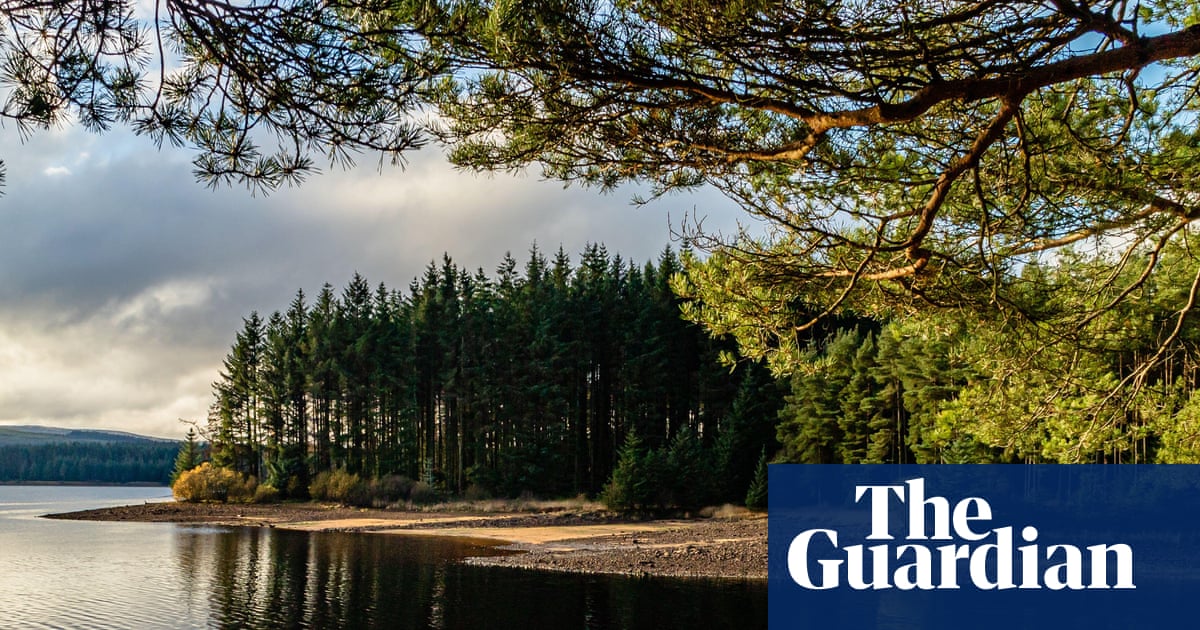
Deep in Kielder Forest, on the northern side of the vast Kielder Water stands Silvas Capitalis, a giant, two-storey timber head, one of the most striking of the 20 sculptures tucked between the pines. It’s an eerie sight, almost shocking; its mouth ajar, as if astounded by all it sees. It’s my first visit to Kielder, and my face has been wearing a similar expression since I stepped out of the car at the lakeside trying to take in the scale of the landscapes unfolding around me. Kielder doesn’t look like England – at least, not the England I know. For a start, it’s vast; 250 sq miles (648 sq km), with 158m trees, mostly sitka spruce conifers planted by hand. And even though it’s a plantation, there’s a wilderness feel that reminds me of Finland or Canada; a great swathe of nature at its most intense. It’s a working forest, involving 500 full-time jobs (not including tourism) and 2026 marks the centenary of the very first plantings, when the UK was in need of …