All posts tagged: learning

Don’t stop at Duolingo, set realistic goals, balance skills: how to start learning a new language | Well actually

Don’t stop at Duolingo, set realistic goals, balance skills: how to start learning a new language | Well actually

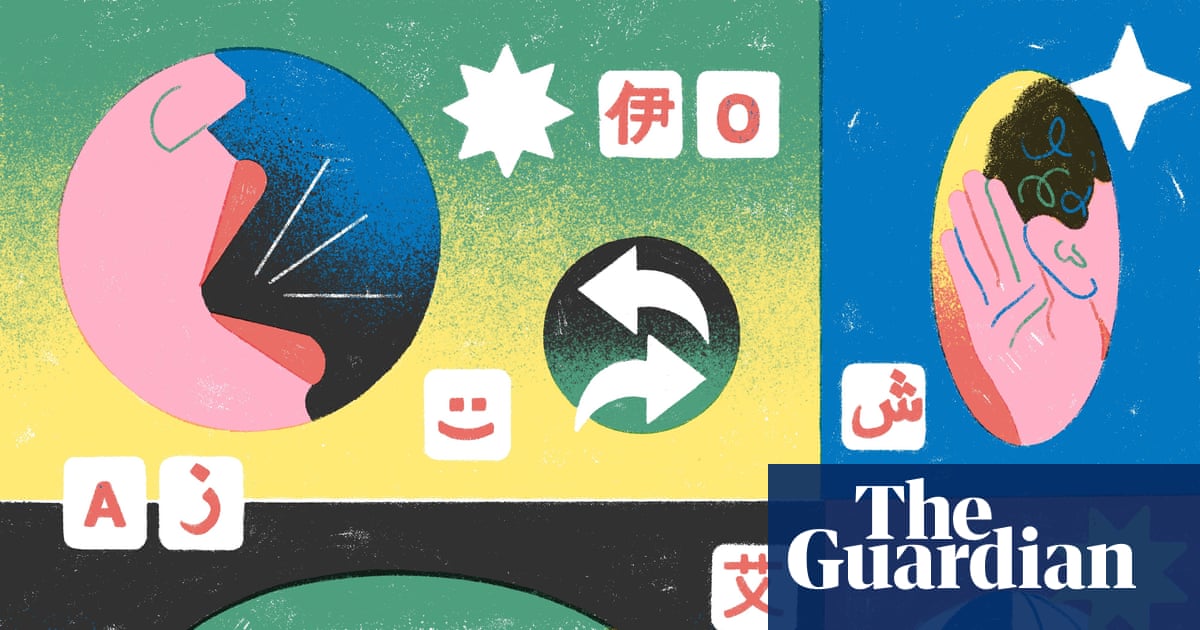
If there’s one thing guaranteed to make a pop-culture character look cool and sophisticated, it’s being multilingual. Think James Bond, Yasmin from Industry or Scrooge McDuck. Learning a new language not only makes you look cool – it also allows you to familiarize yourself with another culture, connect with new people and enjoy a wider variety of art and media. And it’s good for your brain. Studies have shown that learning a new language is associated with improved concentration, stronger communication skills, a more powerful memory and greater creativity. But if you’re not an international man of mystery, an heiress or a billionaire duck, how does one go about it? While there are a number of ways to learn languages, there is one thing all polyglots – people who speak several languages – share, Dr Lydia Machova, a language mentor and former interpreter, said in a popular TED Talk: “We simply found ways to enjoy the language-learning process.” Below, experts share how you can start learning a new language. How do humans learn languages? To …

What learning English means to migrants

What learning English means to migrants

It is widely accepted that learning English is essential for many adult migrants who move to the UK. Yet in the last census, over 1 million residents in England and Wales reported not speaking English well or at all. Over the years, governments have firmly placed the duty to learn English on the newcomer, framing English proficiency as a requirement of integration. Recent migration reform proposals increase the emphasis on English proficiency and progress in deciding who can come to the UK and stay long term. Experts argue that language learning is not always linear, and that these policies risk turning English into a surveillance tool, rather than a pathway to integration. Read more: Esol English classes are crucial for migrant integration, yet challenges remain unaddressed Meanwhile, English classes for migrants have become increasingly politicised. In my ongoing PhD research, I have been speaking to learners in English for speakers of other languages (Esol) courses, across a devolved city region in the north of England, to find out what learning English means to them. I …

11 Basic Manners That People Today Didn’t Learn Or Don’t Care About

11 Basic Manners That People Today Didn’t Learn Or Don’t Care About

In our often status-driven, convenience-oriented, selfish modern society, many people are noticing a lack of basic manners that for some reason people today didn’t learn or don’t care about. And it reveals quite a lot about not only their upbringing, but who they are as a person. 1. Respecting your elders PeopleImages | Shutterstock In theory, respecting your elders and people with life experiences that you lack is a great idea. However, many younger people today are breaking down this norm in practice. Respect is a two-way street, and young people being intentional about mental health and boundaries push back against the idea that they should have to tolerate misbehavior and offer respect to someone who mistreats them. We could all use a little more grace and love in all of our interactions, and while that doesn’t mean tolerating someone toxic, it could mean being willing to offer respect and create space in your best interest. RELATED: 10 Phrases People Use When They Weren’t Raised With Good Manners 2. Saying ‘please’ and ‘thank you’ PeopleImages …

A single workout can rewire your brain’s memory circuits

A single workout can rewire your brain’s memory circuits

A brief period of exercise may do more for your brain than you expect. New research led by the University of Iowa shows that even a single workout can rapidly shift how your brain processes memory. The findings offer the first direct look at how exercise changes electrical activity in the human brain tied to learning and recall. For years, scientists believed exercise improved memory, but they lacked direct proof from human brain activity. This study changes that. By recording signals inside the brain, researchers captured real-time changes in neural patterns after physical activity. What they saw suggests your brain becomes more connected and active in key memory networks almost immediately after exercise. A Rare Look Inside the Human Brain Studying brain activity at this level is difficult. Most research relies on imaging tools that track blood flow, not actual electrical signals. These methods show trends but miss the fast bursts of activity that happen in milliseconds. Paradigm, electrode coverage and ripple detection. (CREDIT: Brain Communications) To overcome this, the research team worked with 14 …

Neuroscientists just upended our understanding of Pavlovian learning

Neuroscientists just upended our understanding of Pavlovian learning

A recent study published in Nature Neuroscience suggests that the brain learns to associate a specific signal with a reward based on the amount of time that passes between rewards, rather than the sheer number of repetitions. This challenges a century-old assumption about conditioning, providing evidence that total learning over a given period depends entirely on timing. These findings could shift our understanding of both animal and human learning. For over a hundred years, scientists have generally accepted that associative learning operates through trial and error. Associative learning is the process by which a human or animal learns to link a specific signal with a specific outcome, like a dog learning that a bell means dinner is ready. The prevailing thought has been that more practice leads to better learning. Scientists previously developed a mathematical model suggesting that animals learn by looking backward in time to identify the causes of meaningful effects. In this framework, the brain does not try to predict the future effects of a cue, but rather works backward from a reward …

Three ways AI is learning to understand the physical world

Three ways AI is learning to understand the physical world

Large language models are running into limits in domains that require an understanding of the physical world — from robotics to autonomous driving to manufacturing. That constraint is pushing investors toward world models, with AMI Labs raising a $1.03 billion seed round shortly after World Labs secured $1 billion. Large language models (LLMs) excel at processing abstract knowledge through next-token prediction, but they fundamentally lack grounding in physical causality. They cannot reliably predict the physical consequences of real-world actions.  AI researchers and thought leaders are increasingly vocal about these limitations as the industry tries to push AI out of web browsers and into physical spaces. In an interview with podcaster Dwarkesh Patel, Turing Award recipient Richard Sutton warned that LLMs just mimic what people say instead of modeling the world, which limits their capacity to learn from experience and adjust themselves to changes in the world. This is why models based on LLMs, including vision-language models (VLMs), can show brittle behavior and break with very small changes to their inputs.  Google DeepMind CEO Demis Hassabis …

New MiniMax M2.7 proprietary AI model is ‘self-evolving’ and can perform 30-50% of reinforcement learning research workflow

New MiniMax M2.7 proprietary AI model is ‘self-evolving’ and can perform 30-50% of reinforcement learning research workflow

In the last few years, Chinese AI startup MiniMax has become one of the most exciting in the crowded global AI marketplace, carving out a reputation for delivering frontier-level large language models (LLMs) with open source licenses and before that, high-quality AI video generation models (Hailuo). The release of MiniMax M2.7 today — a new proprietary LLM designed to perform well powering AI agents and as the backend to third-party harnesses and tools like Claude Code, Kilo Code and OpenClaw — marks yet a new milestone: Rather than relying solely on human-led fine-tuning, MiniMax has leveraged M2.7 to build, monitor, and optimize its own reinforcement learning harnesses. This move toward recursive self-improvement signals a shift in the industry: a future where the models we use are as much the architects of their progress as they are the products of human research. The model is categorized as a reasoning-only text model that delivers intelligence comparable to other leading systems while maintaining significantly higher cost efficiency. However, with M2.7 being proprietary for now, it is a sign …

Resources For Learning About Topics

Resources For Learning About Topics

“There is no end to education,” said Jiddu Krishnamurti. The older I get, the more I find this to be true. Whether it’s “official” education (like getting a second university degree or a diploma) or more informal learning —like watching online lectures and reading books on topics that interest me — the end of my schooling by no means meant the end of my education. I’d go as far as saying that the moment you stop pursuing knowledge is the moment your mind stagnates. But how do I keep learning once I’m no longer in school, you ask. I hear you. Resources can be hard to come by if you don’t know where to look. Worse, many popular ones require payment, which makes accessing them difficult for those of us who live paycheck to paycheck. Fortunately, all you need to do is dig in a little deeper to find resources that are either completely free or very affordable. Even if no interesting topic comes to mind at first, I guarantee that once you go over …

My Mother Broke A Generational Curse By Learning How To Swim

My Mother Broke A Generational Curse By Learning How To Swim

My grandmother never stepped foot in a swimming pool. The closest she ever came was the afternoon I held my phone in front of her face, tilting the tiny glowing screen so she could see her great-granddaughters slicing through bright blue water at a swim meet. They were still little then, just beginning to race. Her eyes were tired but sharp. “Shana,” she said, squinting at the screen, “what is that girl doing in that water?!” There was real fear in her voice; the kind that doesn’t come from ignorance, but from history. “She’s racing, Grandma,” I told her. “That’s Zuri. Don’t worry – she’s safe.” She leaned closer, watching those small arms churn. “Do they like swimming?” She nodded slowly, and looked on. “I never did learn to swim, baby. Never even been in a pool.” I squeezed her hand. “I know. But we aim to change all that with Zuri and Amara.” What I didn’t say was that this wasn’t just about safety. It was about rewriting something. My grandmother never learned to …

AI and ChatGPT make life easier, but I won’t let my kids skip the struggle

AI and ChatGPT make life easier, but I won’t let my kids skip the struggle

For a child who doesn’t yet have that mental model or knowledge, there is no warning signal. The answer from ChatGPT simply becomes their understanding of the topic.  This is why children must learn to verify claims, cross-check references and understand that fluency is not the same as truth.  Then there is the social dimension. Teenagers now use ChatGPT to draft replies to friends, find recommendations for cafes, and even vent when they feel frustrated.  AI performs these tasks remarkably well. It rarely contradicts and it can be calibrated to affirm.  For adolescents still forming their identities, a tool that consistently tells you what you want to hear presents its own risks.  Emotional growth requires disagreement, complexity and the occasional discomfort of human relationships. A chatbot that provides only validation can sometimes do more harm than good. WHY STRUGGLE STILL MATTERS   With my younger children, I’m not rushing anything, even though they have friends who are already using ChatGPT to help with homework.  At the primary school level, the cognitive struggle of doing work the …