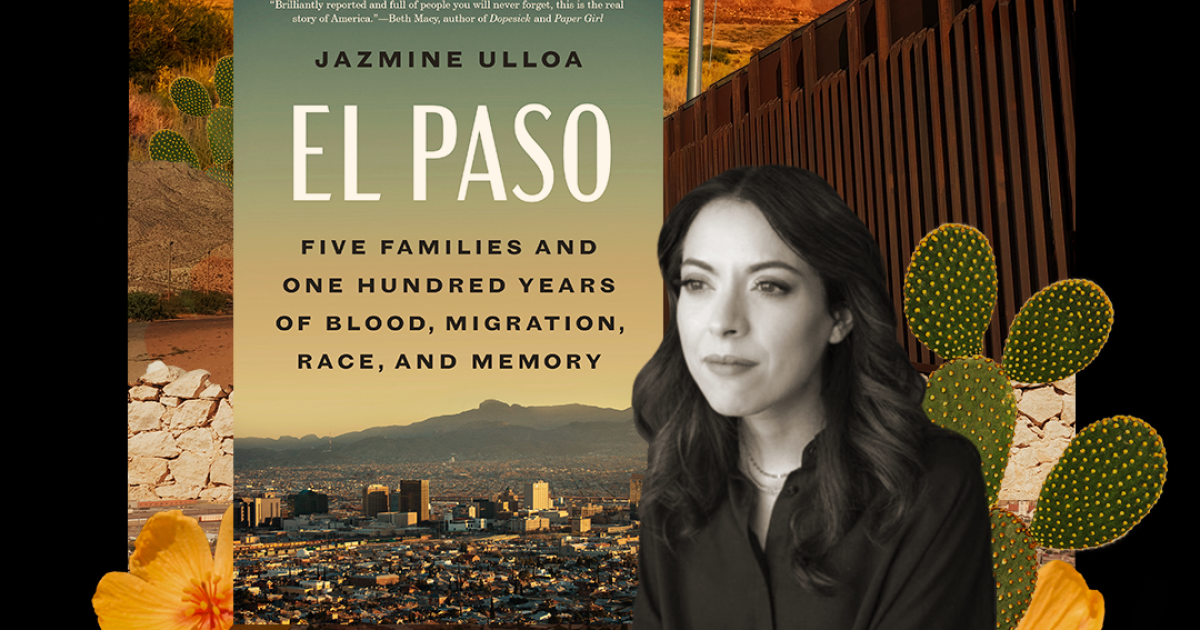
The Importance of El Paso | Julia Preston
El Paso sits in a verdant opening between arid mountains at the westernmost tip of Texas, at a place where the Rio Grande often runs shallow enough to wade across from Ciudad Juárez, its twin city in Mexico. Since the lands north of the river were taken over by the United States in 1848 as the spoils of the Mexican-American War, the pass has been a crossing point, in both directions, for Mexican immigrants, laborers, and traders; for soldiers and smugglers, politicos and revolutionaries; for cowboys, Native people, Black people; for families bifurcated by the boundary. The journalist Jazmine Ulloa grew up in the city, and in the course of her work over the past decade she came to feel that her hometown had been wrongly marginalized in the story Americans tell about the origins and development of their country. In El Paso: Five Families and One Hundred Years of Blood, Migration, Race, and Memory, she sets out to restore the city “to its rightful position” as a place of entry and connection as consequential …