All posts tagged: flavour

What Flavour Is Cola? This Is What Gives Soft Drink Its Distinct Flavour

What Flavour Is Cola? This Is What Gives Soft Drink Its Distinct Flavour

If you had to guess what the secret behind that distinctively malty Biscoff flavour is, you probably wouldn’t say sugar ― but that’s likely what it is. Similarly, red velvet cake’s earthy, tender flavour isn’t created by crimson berries or beetroot; traditionally, it’s the action of buttermilk and vinegar on Dutch-processed cocoa and baking soda that gives it its signature taste and hue. It also contains vanilla. So, it shouldn’t have shocked me that cola’s taste is partly down to an unexpected source; namely, the kola nut (yes, there is such a thing). What’s a kola nut, and what other flavours are involved? According to beverage company StrangeLove, “cola brands guard their own secret formulas with their lives, using generic terms such as ‘artificial and natural flavours.’” Talk of Coca-Cola’s top-secret “7X” ingredient seems to confirm such theories. Nonetheless, some ingredients stay constant, StrangeLove explains. “Cola generally is a carbonated beverage which consists of these key ingredients; kola nut, citrus oils, vanilla and cinnamon,” they say. This is usually mixed with a caramel base for …

Snack Lovers Left Stunned When They Learn What Flavour Biscoff Really Is

Snack Lovers Left Stunned When They Learn What Flavour Biscoff Really Is

Did you know airlines love Biscoff? Brett Snyder, the president of flying-focused blog Cranky Flier, told Conde Nast Traveller: “You want to avoid anything that requires a specific temperature. The default snack of choice used to be peanuts, but all the concerns about allergy really quashed that one.” You also need “something that’s either salty or sweet to really get people’s taste buds working — which they do differently at altitude than they do on the ground,” he added. But what is that distinctive Biscoff flavour to begin with? At first, I thought it was something like malt; but their ingredients list doesn’t include that. I found out that spices aside, their real secret is sugar. But don’t all biscuits have sugar? You’d be right there ― but it’s about how they cook it. The company’s own site lists “the distinctive caramelised” profile as a cause of its “unique taste and crunchiness of Biscoff.” That tracks. Jan Boone Sr., who invented the cookie, was the first to create “a caramelised biscuit with nothing but natural …

How to cook like a flavour tourist at home: Four global recipes to try

How to cook like a flavour tourist at home: Four global recipes to try

Sign up to IndyEat’s free newsletter for weekly recipes, foodie features and cookbook releases Get our food and drink newsletter for free Get our food and drink newsletter for free There was a time when “eating your greens” felt like a duty – something endured rather than enjoyed. Now, they’ve become the passport. In 2026, “flavour tourism” is less about boarding a plane and more about what’s happening in your frying pan: Korean heat, Japanese umami, Mexican smoke – all within reach, all on a Tuesday night. What’s clever here is not just the globe-trotting ambition, but the vehicle. Cavolo nero and kale – sturdy, slightly bitter, unmistakably British staples – are recast as something far more versatile. They crisp up like seaweed in a hot oven, soak up spice like a sponge, and cut through richness with that dark, earthy edge. In other words, they behave exactly as the best travel companions should: adaptable, low-maintenance, and surprisingly good in almost any setting. So you get teriyaki pork meatballs with shards of crisped cavolo nero, …

Choc horror: Why ‘flavour’ bars and small packs are here to stay | Money News

Choc horror: Why ‘flavour’ bars and small packs are here to stay | Money News

Chocolate-flavour bars and smaller packs appear here to stay despite the fall of cocoa costs to a near three-year low and a 20% drop in the sugar price. It was last year, during near-record-high cocoa prices, that customers began noticing smaller packs and the phrase “chocolate flavour” bar, as the cocoa content dropped to such a level that manufacturers could no longer describe their products as chocolate. Read more: Real-life Wonka explains chocolate crisis Image: Are you chocolate in disguise? Yes, actually Toffee Crisp and Blue Riband bars became “chocolate flavour” in December, as they didn’t contain the minimum 20% cocoa solids and 20% milk solids required to be described as milk chocolate in the UK. That followed McVitie’s Penguin and Club in October, while KitKat White and McVitie’s white digestives underwent the rebrand before 2025. What now for the ‘chocolate flavour’ bar? No changes appear to be in the works. Of the companies that replied to Sky News, none said they were making product or recipe changes. “There are currently no plans to make …

Whisky terroir explained – does place shape flavour?

Whisky terroir explained – does place shape flavour?

Terroir – the wine world’s favourite way of saying something tastes like somewhere. It’s why Pinot Noir from Burgundy’s Cote d’Or carries subtle notes of red fruit and forest floor, while the same grape in Central Otago tastes brighter, louder and almost sunlit in its intensity. Terroir is the land’s signature, quietly signed onto a crop. Whisky, though, has been slower to embrace the language, despite being born from grain, water and wood. So why the reluctance? Mark Reynier, perhaps the whisky industry’s most outspoken champion of terroir, sees the resistance as largely cultural. “Firstly, terroir is a fancy French word with no adequate English equivalent. To non-wine drinkers it has an uncomfortable air of pretense, prejudice, and yahoo pomposity,” he said. “Secondly, it is an inconvenient truth for an industry that seeks homogenised, international supply. Local produce with provenance and identity then becomes nothing more than heretical.” Reynier’s perspective comes from a long career in drink. He spent 20 years as a wine merchant before leading the revival of Islay’s Bruichladdich in 2001 – …

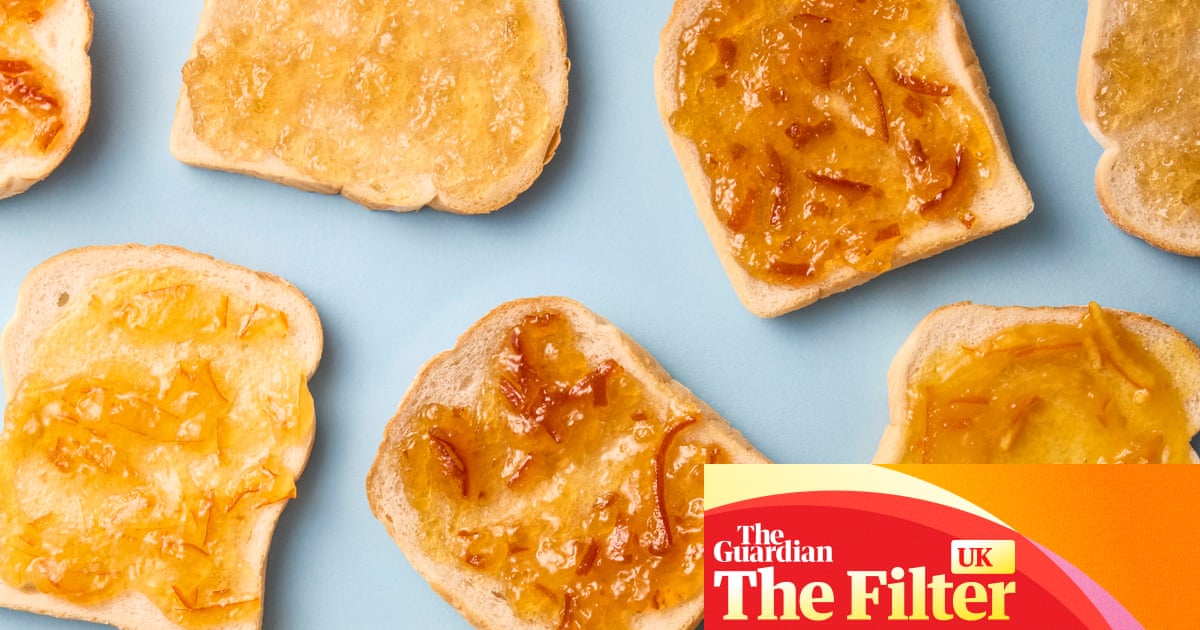
‘A classic citric-forward twang and complex flavour’: the best UK supermarket marmalade, tasted and rated | Jams, preserves and spreads

‘A classic citric-forward twang and complex flavour’: the best UK supermarket marmalade, tasted and rated | Jams, preserves and spreads

For this week’s taste test, I asked my old River Cottage colleague, friend and author Pam “the Jam” Corbin for advice. “A truly brilliant marmalade,” she says, “is simply one where the peel, the gel, the texture and indeed the flavour are in harmony. The Guardian’s journalism is independent. We will earn a commission if you buy something through an affiliate link. Learn more. “The amazing and rather magical thing about marmalade,” Pam says, “is that if 100 people made a panful, each one would vary: different sugars, different peel sizes, different boil times and even different water influence the final outcome.” Store-bought products are no different, though most commercially produced marmalades are made with extra pectin, acidity regulators and orange oil, which, while relatively harmless, all affect the taste and texture, and aren’t entirely necessary, either. The best supermarket marmalade Best overall:Tiptree ‘tawny’ orange marmalade £2.95 for 340g at Waitrose (87p/100g) ★★★★☆ A classic dark marmalade with a rich, caramel, orange flavour. Generous and very thick-cut pieces of chewy peel throughout. The second-highest fruit content …