All posts tagged: Objects

Kiah Celeste Finds Elegance in Everyday Objects Through Sculpture

Kiah Celeste Finds Elegance in Everyday Objects Through Sculpture

Kiah Celeste trained as a photographer, majoring in the medium at SUNY Purchase. But after school, she abandoned it quickly, frustrated by all the rules that accompany such a technical pursuit. When I visited her Brooklyn live/work studio, it was brimming with sculptures, and I asked her if she thought she used her photo training indirectly. “If I do,” she said, “it’s by avoiding every single thing I learned.”  Instead, Celeste credits her hands-on post-college experience as an art handler—first around New York and then at the Louvre Abu Dhabi—as the genesis of her sculptural practice. One day, in Abu Dhabi, colleagues were organizing a pop-up show; she wanted to participate, but resources were tight. So Celeste set about collecting refuse, happening upon a marble tub that she turned into Balance Bath (2019), an inclined pink fixture adorned with Memphis Group–like shapes and squiggles. Related Articles Kiah Celeste: Pending Mobile, 2024. Celeste, a New York native, has been “foraging” for materials ever since. She has an incredible knack for making everyday objects feel foreign and …

From the smallest to the biggest objects in space

From the smallest to the biggest objects in space

Fully comprehending our Universe requires imagining extraordinarily different scales. A region of space devoid of matter in our galaxy reveals the Universe beyond, where every point visible here is a distant galaxy. The cluster/void structure can be seen very clearly, demonstrating that our Universe is not of exactly uniform density on all scales. While there are many galaxy-rich regions, galaxy-poor or even galaxy-free regions are also abundant, like holes within a cosmic Swiss cheese. Within this cosmic web, many smaller, bound structures are present, but they are not resolvable on this scale. Credit: ESA/Herschel/SPIRE/HerMES Astronomically, many grand structures naturally arise. A large section of the Eagle Nebula, with four of the Hubble Space Telescope’s iconic images superimposed atop the relevant region of the larger nebula. Although these features, highlighted by the central Pillars of Creation, are incredibly interesting because of the neutral matter still present, most of the nebula is instead simply an empty, cavernous void littered with isolated stars and star clusters. With only a few thousand new stars inside, it showcases how spectacular, …

I used Photoshop’s new AI tool to rotate objects in 3D, and it’s pure magic

I used Photoshop’s new AI tool to rotate objects in 3D, and it’s pure magic

David Gewirtz / Elyse Betters Picaro / ZDNET Follow ZDNET: Add us as a preferred source on Google. ZDNET’s key takeaways Photoshop can generate details that the camera never captured. Rotate Object pairs impressively well with Harmonize. Great results still require Photoshop skill, judgment, and cleanup. Adobe is on a roll with AI-enabled Photoshop features. Last fall, I had way too much fun with the Photoshop Harmonize feature, which automatically adjusts an object’s color, lighting, and shadows to match a background. This time, it’s the Rotate Object feature, which rotates a 2D object in 3D space. Also: My new favorite Photoshop AI tool lets me combine images in one click – and I can’t stop You have to see it in action, especially in combination with Harmonize, to see what this new bit of magic can do. Update your Photoshop This new feature is available in Photoshop v27.6. If you don’t have that version, use the Creative Cloud app to update your version. Screenshot by David Gewirtz/ZDNET Rotate Object interface Photoshop has always had a rotate capability, …

Diego Rivera’s Grandson Donates 150,000 Objects to Museo Anahuacalli

Diego Rivera’s Grandson Donates 150,000 Objects to Museo Anahuacalli

Mexico City’s Museo Anahuacalli is set to receive more than 150,000 objects from Juan Rafael Coronel Rivera, the grandson of Diego Rivera, in a donation that significantly expands the museum’s holdings and renews attention on the artist’s original vision for the site. As first reported by The Art Newspaper, the gift spans centuries, from 16th-century ceramics to textiles, photographs, wooden objects, prints, and archival material tied to Rivera and his circle. The works will be transferred in stages over the coming months, beginning with ceramics and followed by manuscripts and correspondence, with completion expected by the end of the year.  Related Articles Coronel Rivera, a photographer and art historian, spent more than four decades assembling the collection. It brings together pre-Hispanic objects, family documents, and works from his own career, though it does not include paintings by Rivera or Frida Kahlo.  Speaking to the Art Newspaper, Coronel Rivera said the collection had always been intended for a museum but that he had not expected it to end up at Anahuacalli. He added that he had not …

Dense dark matter clumps link three strange objects across the universe

Dense dark matter clumps link three strange objects across the universe

A tiny object half a universe away, a scar in a stream of stars circling the Milky Way, and an unusual star cluster in a nearby satellite galaxy may not seem related at first glance. Yet a new study argues they could all trace back to the same kind of invisible structure. This structure is built from a more active version of dark matter than physicists usually assume. That idea matters because dark matter is not a side note in cosmic history. It makes up about 85% of the universe’s matter. However, no one has seen it directly. Scientists infer its presence from gravity, from the way galaxies rotate, how galaxy clusters behave, and how light bends on its way to Earth. For years, the standard picture has treated dark matter as cold and collisionless. In that view, its particles drift through one another without much fuss. The model works well on large scales. But some smaller, denser structures have kept standing out as awkward exceptions. A team led by UC Riverside physicist Hai-Bo Yu …

Dolby Atmos and the (sound) objects of my affection: How Cadillac, AKG, and Maroon 5 helped me enter my spatial-audio era

Dolby Atmos and the (sound) objects of my affection: How Cadillac, AKG, and Maroon 5 helped me enter my spatial-audio era

Sign Up For Goods 🛍️ Product news, reviews, and must-have deals. I was somewhere around East Hollywood, at the onramp of the 101, when the buzz began to take hold. You know the buzz. That indefinable thing when people catch something from music. I’ve been chasing the buzz for over a year, through SUVs, concert venues, convention centers, and recording studios. From behind the wheel to behind mixing desks. From consoles to consults. I’ve been chasing the buzz while learning how Dolby Atmos and object-based audio have expanded the immersive nature of music. It’s January 2025. I’m in the front passenger seat of a Cadillac OPTIQ all-electric SUV, foot traffic and metadata swirling around me. But we’re sitting totally still. It’s CES, and we’re parked in the lobby of Dolby Live at Park MGM Las Vegas. It’s not my first listening session in an EV. But it is my first time really hearing what multidimensional in-car entertainment can do, and what this 19-speaker AKG Studio Audio System in particular is capable of.  Prince’s “When Doves …

They’re in clouds, electric sockets and even on toast. Why do humans see faces in everyday objects? | Psychology

They’re in clouds, electric sockets and even on toast. Why do humans see faces in everyday objects? | Psychology

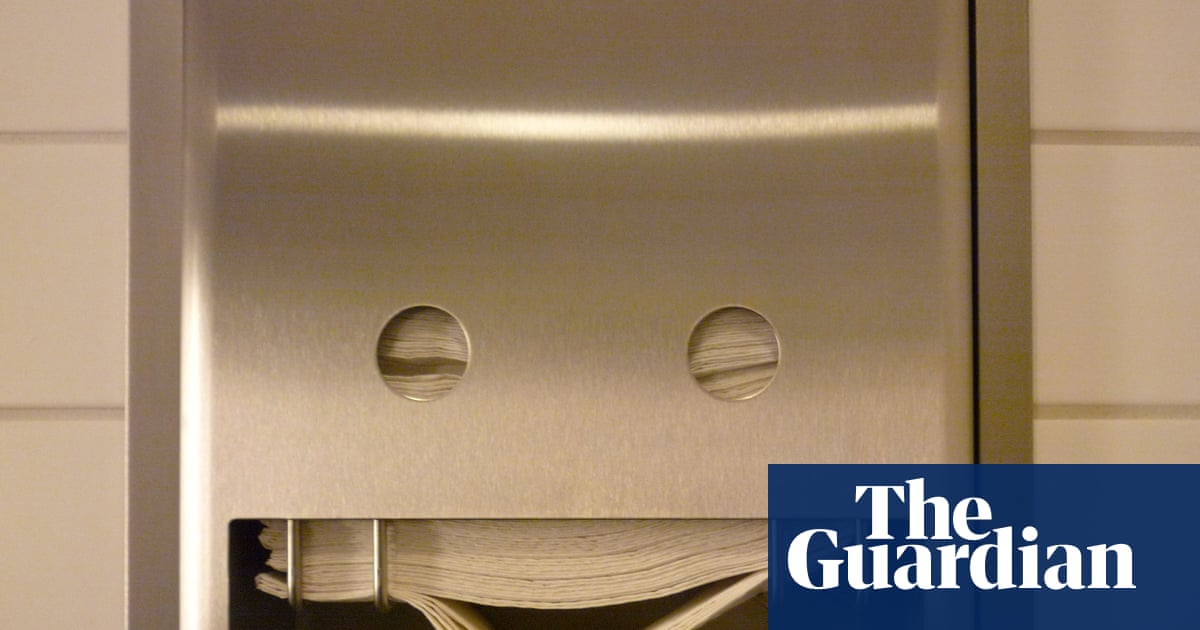
Faces: we see them in clouds, electrical outlets and even a $28,000 toasted sandwich said to look like the Virgin Mary. Known as face pareidolia, seeing faces in inanimate objects or patterns of light and shadow is a common phenomenon. So primed are our brains to detect facial features that we even see faces in meaningless visual noise, especially when the images are symmetrical, new research suggests. In a study published in the journal Royal Society Open Science, researchers showed participants everyday objects that resembled faces, as well as abstract images of visual noise that had no inherent meaning. The vast majority of participants – 90% – reported seeing a face in at least one of the noise images. Study co-author Prof Branka Spehar of the University of New South Wales said researchers wanted to investigate whether images more minimal than objects with face-like features, with “two round things which could be eyes … and a horizontal thing which could be a mouth”, would elicit similar visual responses. People saw faces more frequently in the images …

Why do objects shatter the same way? Math solves the mystery

Why do objects shatter the same way? Math solves the mystery

2-D: Short for two-dimensional. This term is an adjective for something in a flat world, meaning it has features that can be described in only two dimensions — width and length.  3-D: Short for three-dimensional. This term is an adjective for something that has features that can be described in three dimensions — height, width and length.  array: A broad and organized group of objects. Sometimes they are instruments placed in a systematic fashion to collect information in a coordinated way. Other times, an array can refer to things laid out to make a broad range of related things, such as colors, visible at once. The term can even apply to a range of options or choices. asteroid: A rocky object in orbit around the sun. Most asteroids orbit in a region that falls between the orbits of Mars and Jupiter. Astronomers refer to this region as the asteroid belt. atom: The basic unit of a chemical element. Atoms are made up of a dense nucleus that contains positively charged protons and uncharged neutrons. The nucleus is orbited …

The Met Releases High-Definition 3D Scans of 140 Famous Art Objects: Sarcophagi, Van Gogh Paintings, Marble Sculptures & More

The Met Releases High-Definition 3D Scans of 140 Famous Art Objects: Sarcophagi, Van Gogh Paintings, Marble Sculptures & More

We can go through most of our lives hold­ing out hope of one day see­ing in real­i­ty such works as van Gogh’s Sun­flow­ers, Mon­et’s Haystacks, a clay tablet con­tain­ing actu­al cuneiform writ­ing with our own eyes, or the ancient Egypt­ian Tem­ple of Den­dur. We can actu­al­ly come face to face — or rather, face to sur­face — with all of them, tem­ple includ­ed, at New York’s Met­ro­pol­i­tan Muse­um of Art, which con­tains all those and more arti­facts of human civ­i­liza­tion than any of us could hope to exam­ine close­ly in a life­time. But even if we did, we might only feel tempt­ed to look at them more close­ly still, even to touch them. That may be an improb­a­ble hope, but we can at least get clos­er than ever now thanks to the Met’s new archive of high-def­i­n­i­tion 3D scans. “View­ers can zoom in, rotate, and exam­ine each mod­el, bring­ing unprece­dent­ed access to sig­nif­i­cant works of art,” says the Met’s offi­cial announce­ment. “The 3D mod­els can also be explored in view­ers’ own spaces through aug­ment­ed real­i­ty (AR) on most smart­phone …

Researchers create an invisibility cloak by bending magnetic fields around real-world objects

Researchers create an invisibility cloak by bending magnetic fields around real-world objects

Magnetic invisibility sounds simple in theory. Place the right materials around an object and magnetic fields flow around it as if nothing were there. Reality has been far messier. For nearly two decades, physicists have tried to cloak objects from magnetic fields using carefully arranged materials. Early designs relied on idealized shapes such as perfect cylinders or spheres. Those forms behave predictably in equations and laboratory tests. Real devices rarely cooperate. Power cables twist through irregular housings. Electronic components form sharp corners. Industrial systems contain uneven edges and layered geometries. Once these shapes enter the picture, magnetic cloaking designs often fail, leaving obvious distortions in the surrounding field. Magnetic cloaking achieved using bilayer SC-SFM metastructures with different geometries. (CREDIT: Science Advances) Researchers at the University of Leicester now report a way around that problem. Their new framework, described in Science Advances, allows magnetic cloaks to be designed for objects with complex shapes using materials that already exist. Two Materials Working Together Magnetic cloaking typically relies on a pairing of two materials. The inner layer is …