All posts tagged: realism

Moral Realism and the Persistence of Ethical Myths

Moral Realism and the Persistence of Ethical Myths

Moral realism is the view that there are moral facts, that there are objective moral properties out there in the world. But there are not. Notions like ‘rights’, ‘wrongs’, and ‘duties’ are leftovers from a pre-scientific age in which dogma and myths ruled over evidence and reason. And much like unicorns, gods, and other fairy tales, they should be consigned to hell. Despite the pride we take from human scientific and technological advancements, our minds, our brains are as much obstacles to these achievements as they are its cause. Humans are largely irrational and addicted to their own intuitions, which we had to overcome in order to develop modern science. Of course, even when it comes to science, we have hardly overcome this psychology. The rise of anti-scientific sentiments is not a reflection of the realization of flaws of science, as some conspiracy theorists may proudly proclaim, but simply a reflection of our poorly designed primate brains (from the perspective of finding out truths about the world). But when it comes to morals, our thinking …
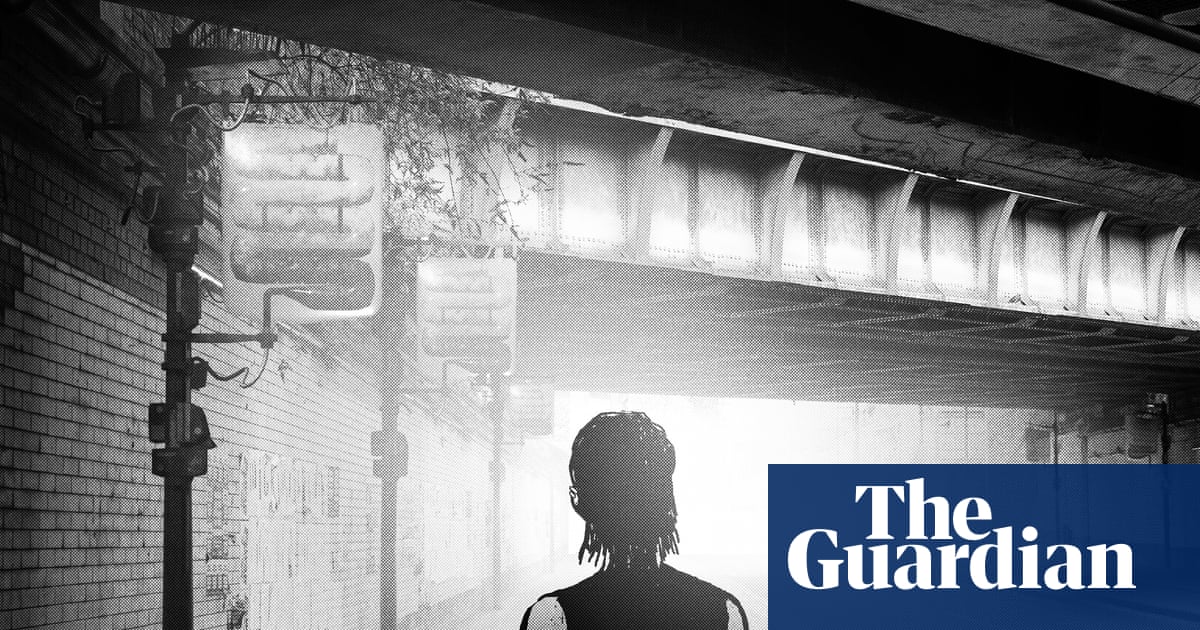
Signet City – futuristic parasites feed off 80s social realism in dystopian RPG | Games

Signet City – futuristic parasites feed off 80s social realism in dystopian RPG | Games

Over the past decade, an impression has taken root among gamers that any real creativity and originality in the industry is to be found in the indie, rather than mainstream, sector. Gareth Damian Martin can claim some responsibility for that. Their first game, 2020’s In Other Waters, merged sci-fi and underwater xenobiology in a uniquely calming and thought-provoking manner, while Citizen Sleeper (2022) and Citizen Sleeper 2: Starward Vector (2025) were full-blown sci-fi epics with ultraminimal aesthetics and a rare intelligence. Martin has broken with tradition by unveiling their next game, Signet City, far in advance of its 2027 launch. Set in a dystopian monochrome city, it’s a narrative role-playing adventure with a curious first-person perspective. “You play as a parasite,” says Martin. “And it felt natural that it should be a game where you see the world through the eyes of your hosts, very literally. You wake up in the mind of a person called Sid at the same time as she’s waking up in the river of a city. You’re coming to understand …

Mark Fisher’s Capitalist Realism vs. Neoliberalism: What’s the Difference?

Mark Fisher’s Capitalist Realism vs. Neoliberalism: What’s the Difference?

Published: Jun 1, 2026written by Simon Lea, PhD Philosophy Summary Capitalist realism is the belief that capitalism is the only viable system, making it seem impossible to imagine alternatives. The concept is critiqued for not being clearly distinct from the political and economic doctrine of neoliberalism. Fisher argues even anti-capitalist resistance is absorbed and commodified, making genuine opposition feel impossible within the system. The article claims Fisher’s thesis is weakened by a deference to authority rather than presenting original, persuasive arguments. Show more     Mark Fisher was a blogger, social critic, cultural theorist, and academic philosopher. He made two strong claims in his 2009 work Capitalist Realism: Is there no alternative? First, what he calls ‘capitalist realism’ is a historically specific ideological formation within late capitalism. Second, this formation forecloses the imagination of viable alternatives. The second claim is considerably more ambitious than the first. It is unclear how Fisher’s concept of ‘capitalist realism’ is analytically distinct from neoliberalism as an economic and political doctrine. But even if we accept that ‘capitalist realism’ designates a unique configuration of capitalism, this …

Adapting ‘The House of the Spirits’ for TV was ‘magical realism’

Adapting ‘The House of the Spirits’ for TV was ‘magical realism’

“Let me show you a picture of my grandmother,” Isabel Allende says. She disappears for a moment from her office into her house in Marin County, near San Francisco. Then she’s back, her scarlet blazer and marbled scarf bright against the white walls. She holds up a sepia photograph in a silver embossed frame: the clairvoyant Isabel Barros Moreira, her mother’s mother, her face placid, with dark hair and dark eyes. The creators of the new series adaptation of Allende’s landmark book “The House of the Spirits” — the first three episodes premiere Wednesday on Prime Video — had not seen this photograph, but her grandmother could very well be one of the actors, Allende says. Many of the characters in “The House of the Spirits,” Allende’s 1982 debut novel, are modeled after members of her family, including her grandmother, grandfather and mother. The story, known for its suffusive magical realism, follows three generations of the del Valle Trueba women through the turbulent history of a conservative South American country, inspired by Allende’s Chile. So …

Original Recipe Magical Realism

Original Recipe Magical Realism

This content contains affiliate links. When you buy through these links, we may earn an affiliate commission. It’s been raining for nearly five years, and yes, a lady did just ascend into heaven while folding her laundry. It’s just another day in Macondo, the fictional setting of Gabriel García Márquez’s One Hundred Years of Solitude. In a recent episode of Book Riot’s newest podcast, Zero to Well Read, Rebecca and Jeff explore the novel that made magical realism a global phenomenon. They talk about what magical realism is (and isn’t), the rise and fall of the Buendía family, the fictional town of Macondo as allegories for real-world history and political events, and why the book is so hard to summarize. Along the way, they offer tips for how to read One Hundred Years of Solitude without getting lost and reflect on why surrendering to its chaos is part of the experience. If you haven’t tuned in to the podcast yet, it’s sort of an English class/book club hybrid where Book Riot OGs Jeff and Rebecca …

‘In the face of Trump’s imperialism, realism means defending the law as an indispensable tool’

‘In the face of Trump’s imperialism, realism means defending the law as an indispensable tool’

Jerome Powell could hardly be more different from Nicolas Maduro. Despite having just been summoned by the US Department of Justice over an obscure case involving renovation work at the headquarters of the US Federal Reserve, the cautious head of the monetary institution faces no risk of ending up in prison like Venezuela’s ousted dictator, who was abducted in Caracas on the night of January 2 by American special forces on Donald Trump’s orders. Because both have become an obstacle to two of the president’s obsessions – interest rates in Powell’s case and Venezuelan oil in Maduro’s – they illustrate the systematized abuse of power that now prevails in Washington. The primacy of force over the law imposes itself everywhere. Since returning to the White House, the interventionist president has stepped up military strikes around the world. The same leader has also deployed the National Guard to patrol major US cities governed by Democrats – starting with the federal capital – even in the absence of significant unrest. In October 2025, the president did not …