All posts tagged: Slavery

French slavery law repealed: ‘Now we can start talking about reparations,’ historian says – Perspective

French slavery law repealed: ‘Now we can start talking about reparations,’ historian says – Perspective

To display this content from YouTube, you must enable advertisement tracking and audience measurement. Accept Manage my choices One of your browser extensions seems to be blocking the video player from loading. To watch this content, you may need to disable it on this site. Try again PERSPECTIVE © FRANCE 24 Issued on: 02/06/2026 – 14:37Modified: 02/06/2026 – 14:40 07:54 min From the show Reading time 1 min Now that France has finally repealed the so-called Code Noir or Black Code, experts are urging the country to also consider the issue of reparations. The Code Noir was the law that effectively regulated slavery by making people like property, notably in the French colonies – enabling people to be worked, beaten, sold, raped and even killed. It was only repealed last week, even though France abolished slavery back in 1848. In Perspective, we spoke to Olivette Otele, a historian and professor at SOAS in London. By: Source link

The five main takeaways from Pope Leo’s encyclical on AI

The five main takeaways from Pope Leo’s encyclical on AI

VATICAN CITY (RNS) — Pope Leo XIV published on Monday (May 25) what is already being called the keynote document of his papacy, titled “Magnifica Humanitas” (Magnificent Humanity), a sweeping encyclical addressing what he considers a new industrial revolution fueled by artificial intelligence. While the document extensively reflects on AI and its repercussions on society, war, work and education, its real focus is offering the Catholic Church’s wisdom on what makes humanity, well, human. If the title doesn’t make that priority clear, then the text reinforces it: “Human” is the most repeated meaningful word in the official English version, followed by “social” and “person.” Leo looks with concern at a culture that sees people as “a means of achieving results, a resource to be used and exploited.” He also warns of certain mindsets, such as transhumanism and posthumanism, that are popular in Silicon Valley and that hope to build a human-machine hybrid world or, worse yet, substitute humanity with machines altogether. Speaking to journalists after the presentation of the encyclical, the Rev. Brendan McGuire, often …

Cannes: ‘Strawberries’ Film Interview: Modern Slavery, Prostitution

Cannes: ‘Strawberries’ Film Interview: Modern Slavery, Prostitution

Promises of “the sweetest” turn into nightmares in Paris-based Moroccan auteur Laïla Marrakchi‘s new film Strawberries, whose original title, La más dulce, hints at just that hoped-for sweetness. The story is inspired by real-life cases of Moroccan women who travel to Spain for seasonal fruit-picking work. Their plan: to earn money with hard work in hot weather, which they can bring back to their families back home to improve their lives. Their reality: living conditions that leave a lot to be desired, less money than promised, modern-day exploitation and slavery, and even sexual harassment and prostitution. Lucky Number is handling international sales for the title, which will world premiere in Cannes’ Un Certain Regard program on xxx. Marrakchi, known for such features as Marock and Rock the Casbah and such TV series as French spy thriller The Bureau and Damien Chazelle’s The Eddy, co-wrote the script with Delphine Agut. Nisrin Erradi (Everybody Loves Touda, Adam), Hajar Graigaa, Hind Braik, Fatima Attif, Larbi Mohammed Ajbar and Itsaso Arana feature in the cast. The film was produced …

Florida’s new history course whitewashes the founders on slavery

Florida’s new history course whitewashes the founders on slavery

Florida has long been a laboratory for autocracy. Several of the Trump administration’s most extreme policies were piloted there, including aggressive immigration enforcement, the systematic rollback of civil rights and voter suppression. Now the Sunshine State is offering a new experiment: a high school history course offering a conservative interpretation of American history and a corrective to the official Advanced Placement U.S. History curriculum, which more than half a million students took last year, and that most historians and educators consider to be ideologically well-balanced. Florida’s Republican governor Ron DeSantis and the state’s education department have attacked the AP course as “woke” and unpatriotic because it examines the complexities of American history including White on Black chattel slavery, the genocide of First Nations peoples and other realities that puncture sacred civic myths such as American exceptionalism and the fantasy that America is, and has always been, the greatest country in the world. The scope of Florida’s latest right-wing project is ambitious, and part of a three-year campaign, according to a recent report by Dana Goldstein …

Musical ‘Mexodus’ highlights the journey of freedom seekers in Mexico, which abolished slavery in 1829

Musical ‘Mexodus’ highlights the journey of freedom seekers in Mexico, which abolished slavery in 1829

History textbooks often include the story of the Underground Railroad, an organized network of secret routes, places and people that guided enslaved populations from the South to abolitionist Northern states. However, less is known about the underground railroad that ran southbound to Mexico. But one live-looped musical is unearthing that hidden history, one beat at a time. Co-created and performed by Brian Quijada and Nygel D. Robinson, “Mexodus” tells the fictional story of Henry, who evades his capture by fleeing Texas across the Rio Grande. After a near fatality, he is saved by Carlos, a farmer and former combat medic battling his own trauma from the Mexican-American War. Together they form solidarity, despite social, racial and political strains plaguing both sides of the border. Following its off-Broadway run at the Daryl Roth Theatre in New York City, the hip-hop and bolero-infused musical directed by David Mendizábal will open at the Pasadena Playhouse stage July 8 and run until Aug. 2. But for history buffs and musical enthusiasts alike, a sonically richer version filled with sound …

Tensions Rise Over Proposed New Zealand Statue Commemorating ‘Comfort Women’ Japan Forced into Sexual Slavery

Tensions Rise Over Proposed New Zealand Statue Commemorating ‘Comfort Women’ Japan Forced into Sexual Slavery

To receive Morning Links in your inbox every weekday, sign up for our Breakfast with ARTnews newsletter. The Headlines COLD COMFORT. A proposed bronze statue depicting a seated girl, intended as a symbol of wartime sexual violence, has sparked tensions between Japan and New Zealand, the Guardian reports. The sculpture, donated to the Korean cultural garden at Barry’s Point Reserve in Auckland by the Korean Council for Justice and Remembrance, commemorates an estimated 200,000 women forced into sexual slavery in Japanese military brothels between 1932 and 1945, known as “comfort women.” Most were Korean, though victims also included Chinese, Southeast Asian, and a small number of Japanese and European women.cJapan’s ambassador to New Zealand, Makoto Osawa, said the planned memorial was “needlessly stirring up” this chapter of history and warned it could harm diplomatic relations, not only between Japan and New Zealand, but also between Japan and South Korea. The Japanese embassy has more bluntly described the statue as part of an “anti-Japan” movement. Since the first “peace statue” was erected in Seoul in 2011, followed by similar installations around the world, Japan …

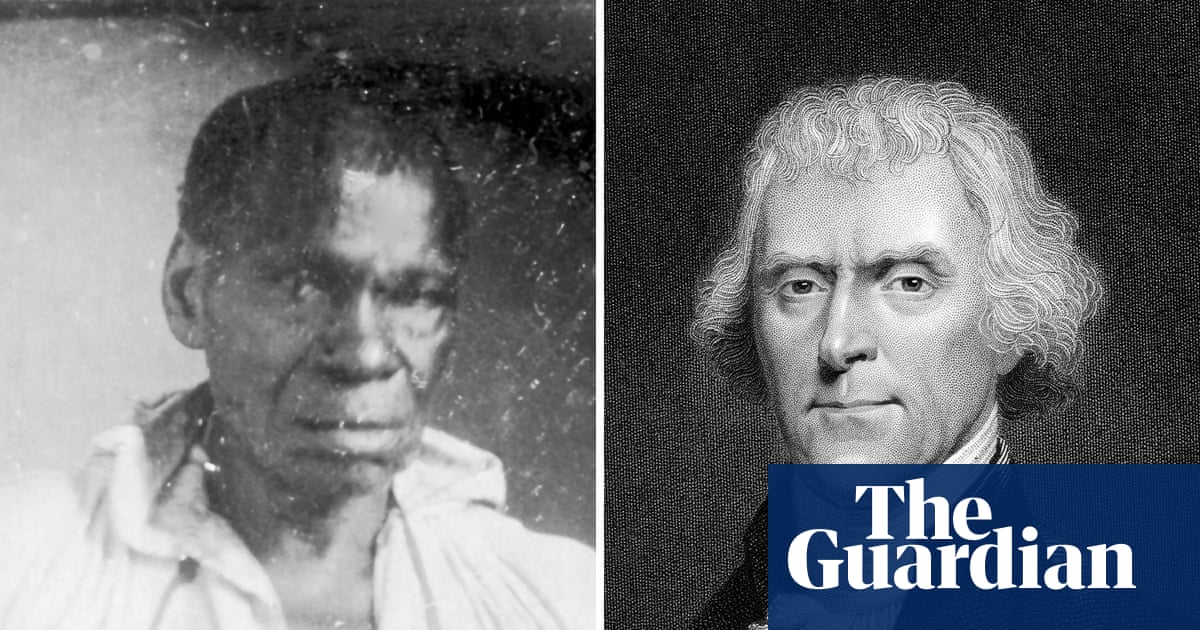
‘Slavery bounded his life’: Thomas Jefferson’s views on race – in his own words | Books

‘Slavery bounded his life’: Thomas Jefferson’s views on race – in his own words | Books

Thomas Jefferson’s interactions with enslaved people bookend his life. The third US president and a founder of the United States was born into a slave-owning family in a society upon which slavery was the bedrock. A Black woman was probably his earliest nursemaid – evidence shows that his mother did not breastfeed her children, so it is probable that a Black woman was also Jefferson’s wet nurse. His earliest memory, which he relayed to his grandchildren, was of being carried on a pillow via horseback by a man his family enslaved on a 50-mile journey to Tuckahoe, Virginia. Given his status as an enslaver – Jefferson owned more than 610 people in his lifetime – those he held in bondage may have been the last people Jefferon saw before he died. An enslaved man, John Hemmings, built his casket. The omnipresence of slavery in his life and its clear contradictions with regards to his views on liberty, create a point of which much of the existing literature on Jefferson must attempt to make sense. Scholars …

UN names African slave trade ‘gravest crime against humanity’ – Eye on Africa

UN names African slave trade ‘gravest crime against humanity’ – Eye on Africa

To display this content from YouTube, you must enable advertisement tracking and audience measurement. Accept Manage my choices One of your browser extensions seems to be blocking the video player from loading. To watch this content, you may need to disable it on this site. Try again EYE ON AFRICA © FRANCE 24 Issued on: 25/03/2026 – 22:35 14:39 min From the show Reading time 1 min In tonight’s edition: The UN General Assembly designates the transatlantic African slave trade as “the gravest crime against humanity”, in a move that advocates hail as a step towards healing and possible reparations. Also, in a visit to top African trading partner Algeria, Italy’s Prime Minister Giorgia Meloni says the two nations will work to increase deliveries of Algerian gas. Plus how the conflict in the Middle East risks crippling Kenya’s flower industry. Produced by Vedika Bahl and Antonia Cimini Source link

Distracting Metaphors | Blog of the APA

Distracting Metaphors | Blog of the APA

Metaphors are great. They can make us see something in a new light: Think of universities as the beating heart of humanity and see what it does to your understanding of these institutions! Metaphors can also reduce complexity: Think of the atmosphere as a glasshouse and see how it helps your understanding of global warming! We use metaphors all the time. About every seventh lexical unit we speak or write is metaphor. But not all metaphors are great. Some make us uneasy. Holocaust metaphors, for example, often do. Should we really say, as PETA did in a notorious campaign, that we are committing the Holocaust on our plates, or that, as gay liberation activists did in the 1980s, the AIDS epidemic is the Holocaust, or that, as we sometimes do jokingly, someone is a grammar Nazi?  One source of uneasiness may be simple disagreement: one may think that there is no Holocaust on our plates, that the AIDS epidemic was a terrible tragedy but not an intentional, systematic destruction of a group, or that, while …

The hidden scandal of modern slavery in London

The hidden scandal of modern slavery in London

Maria* was first brought to London in 2009. The 45-year-old, originally from the Philippines, began working with a wealthy Saudi family in 2013. She says she was promised the minimum wage and one day off each week. Instead, she worked up to 20 hours a day, seven days a week, without pay, and her employers held on to her passport “for safekeeping”. Passport or visa confiscation is a common kafala practice, designed to ensure cooperation, and is often accompanied by explicit or implied threats of deportation. “I didn’t know where I was,” says Maria. “I didn’t know my rights. I thought if I left, I would be arrested.” Source link