All posts tagged: startup

AI research startup Listen Labs scrubbed a .5B funding round for Salesforce talks

AI research startup Listen Labs scrubbed a $1.5B funding round for Salesforce talks

Listen Labs, a market research startup that uses voice AI to conduct customer interviews, recently signed a term sheet for a $125 million Series C at a $1.5 billion valuation, with Menlo Ventures set to lead the round, according to several people with knowledge of the matter. But that round never closed, the people said. Listen Labs walked away from the signed term sheet, a rare occurrence in the venture world and one that is generally frowned upon, according to VCs. The financing likely collapsed because of acquisition talks with Salesforce. The CRM giant has recently held talks to buy Listen Labs for around $2 billion, Business Insider reported. The discussions are not finalized, however, and may not result in a deal, the outlet notes. Listen Labs is one of the leading startups in the rapidly growing field of automating customer research with AI. The three-year-old startup has about $30 million in annualized revenue, about three times more than Simile, a competing startup that predicts human behavior, according to two people familiar with the companies’ …

A Stealth Startup Thinks It Just Hacked the Memory Shortage

A Stealth Startup Thinks It Just Hacked the Memory Shortage

Kepler also says it has improved the density of SRAM using ferroelectrics, which can read and write data at lower voltages than the mechanisms typically used to process and store data in semiconductors. The startup did this by developing a new, low-voltage, composite material that works with this ferroelectric approach. Sasi Manipatruni, a Kepler cofounder and its chief technology officer, says the Kepler team went through 35 iterations of composites before they landed on a material class that they thought would make memory chips easier and cheaper to make. “Once we found a way to solve the physics problem—as in the physical limitations for HBM—we came up with a material innovation that helps with the amount of memory you can have between chips,” he says. In its early build-outs with GlobalFoundries, Kepler says it was able to convert a fab into a “next-generation” fab in just eight months, compared to a typical 24-month timeframe. “Out goal is to take the fabs and architectures already built, and push them to the limits of physics,” Olaosebikan says. …

There’s a Hot New Egg-Freezing Startup. It’s Weirder Than You Could Imagine

There’s a Hot New Egg-Freezing Startup. It’s Weirder Than You Could Imagine

The Instagram post, precision-guided by sex and age, had zeroed in on its target. Yuchen Tu is a conser­vatory-trained viola player from Chongqing, China, a lover of science fiction, and an aspiring member of the US Army Reserve Officer Training Corps. She’s exacting and intense, with sky-high standards. And late last spring, just after her 24th birthday, she realized she might be the perfect candidate to freeze her eggs—for free. Tu goes by Sue, a name she likes because it reminds her of the 2024 body horror film The Substance, whose protagonist tortures herself in pursuit of youth and beauty. To prequalify for free egg freezing, all Sue had to do was take a two-minute quiz. “Not everyone can pass this exam,” she remembers thinking. “Oh, it seems like a competition.” Sue passed, as have thousands of young women allured by the promise of a company called Cofertility. “The best time to freeze your eggs is when you can least afford it,” goes the company’s mantra, uttered on repeat by its public face and CEO, …

Startup ARR is less secure than ever, new research shows

Startup ARR is less secure than ever, new research shows

AI has ushered in a lot of never-happened-before moments, but one of the most transformative is its impact on enterprise IT. Companies that have historically been cautious and committed long-term to what they buy are on pace to spend $4.25 trillion on technology in 2026, market researcher IDC predicts. It’s almost all driven by AI. New research from venture capital firm Madrona shows that 74% of 150 enterprise IT professionals it surveyed plan to expand their AI budgets in the next 12 months, and the rest plan to hold spending steady. Yet these same enterprises say that fewer than half of their AI pilots ever make it into full production. That’s actually an improvement. Last year, MIT famously reported that 95% of enterprise AI projects had failed in terms of ROI. Fewer than half succeeding is a pretty low bar, but it’s better than a 5% success rate. But the most telling finding from Madrona’s report is that, even when an enterprise does roll out the AI tech, it doesn’t commit to it long term. …

Adobe acquires Indian market intelligence startup Rilo

Adobe acquires Indian market intelligence startup Rilo

Adobe has acquired India-based marketing intelligence startup Rilo in a deal involving licensing and team acquisition, TechCrunch learned and the company confirmed. This is Adobe’s second acquisition from India after it bought video platform Rephrase.ai in 2023. The companies didn’t disclose the deal’s terms. Beyond confirming the deal, Adobe declined to comment. The acquisition gives Adobe a small team and technology focused on automating marketing workflows, which have been changing as companies use AI to build tools to automate the creation, deployment, and tracking of campaigns, get action items from meetings or calls to complete tasks, and increase brand visibility on platforms like ChatGPT, Gemini, and Claude. Rilo’s technology could bolster Adobe’s existing products as the company targets its larger customers. Founded by IIT batchmates Georgi Boby and Dhruv Jaglan in 2025, Rilo raised $1 million from investors including PeakXV, DeVC, and Day Zero Ventures at a $10 million valuation. A source told TechCrunch that investors will get an exit from this deal, and Adobe will integrate some of Rilo’s IP along with the six-member …

Are We There Yet? Startup Wants to Launch an 80,000-Year Mission to Alpha Centauri

Are We There Yet? Startup Wants to Launch an 80,000-Year Mission to Alpha Centauri

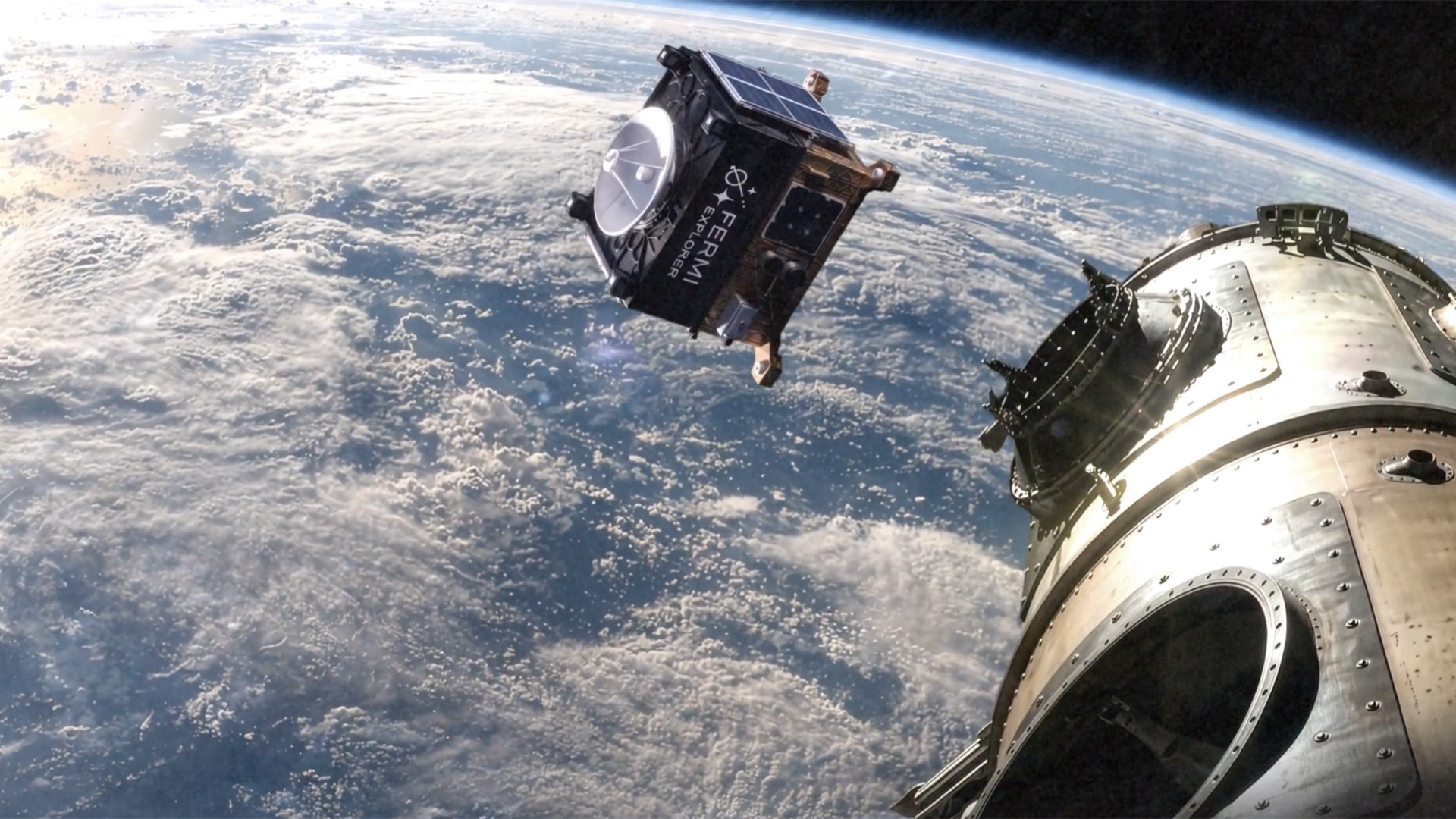
A group of executives and entrepreneurs led by Starcloud co-founders Philip Johnston, Adi Oltean and Ezra Feilden teamed up to develop humanity’s first interstellar spacecraft. If everything goes according to plan, it will launch in 2029, headed for Alpha Centauri, the closest star system to our solar system. But it won’t reach its destination for about 80,000 years.  Known as Fermi Explorer, this non-profit mission aims to build a 10cm cube weighing about 1 kilogram (about 2.2 pounds). Once the cube is built, they plan to attach it to a propulsion system, take it to space and launch it toward Alpha Centauri. It’s the technological equivalent of taking a hefty rock into space, throwing it at Alpha Centauri and waiting for it to get there.  “The mission is intended to make the idea of interstellar travel real, and to encourage more people to confront one of humanity’s biggest unanswered questions when we look beyond our planet,” the group said in a post on X. The post is accompanied by a video showing the Fermi Explorer …

Lachy Groom backs Indian startup aiming to keep aircraft aloft for a year

Lachy Groom backs Indian startup aiming to keep aircraft aloft for a year

Prominent solo investor Lachy Groom has backed a Bengaluru startup attempting an ambitious feat: keeping an aircraft in the sky for more than a year by harvesting energy from ocean winds. Alteon, founded by 20-year-old Samay Sanghvi, announced Tuesday that it raised $2.5 million in a pre-seed round led by Groom, with participation from Together Fund, to develop autonomous aircraft inspired by dynamic soaring, a technique albatrosses use to extract energy from the wind. Groom decided he wanted to invest within the first 30 minutes of their first meeting, Sanghvi told TechCrunch. Conventional aircraft need to carry the fuel or battery power required for a flight. Alteon is trying to break that limitation by designing its small, fixed-wing autonomous aircraft that can extract energy from wind shear above the ocean through dynamic soaring — a maneuver in which an aircraft repeatedly moves between layers of air traveling at different speeds. “Once you build airplanes that can stay in the air for more than a year, there are millions of things you can do with them,” …

How Sweden built one of Europe’s hottest startup ecosystems 

How Sweden built one of Europe’s hottest startup ecosystems 

Sweden is perhaps one of the world’s hottest tech hubs right now. It has long been home to Spotify and Klarna, but this latest wave of companies — from legal AI startup Legora to vibe-coding tool company Lovable — has left everyone wondering what’s going on in one of the world’s happiest countries. Sophia Bendz, a general partner at Cherry Ventures, stopped by Equity to break down the latest in Stockholm’s startup ecosystem. Her answer for why the country has produced so many buzzy startups: Being a founder is actually cool. When she worked at Spotify years ago, the cool thing was to become a banker or go into consulting. “Now, I think a lot of people optimize for creating stuff and optimizing for both sort of freedom and probably wealth.” This year, the startup ecosystem has raised $2.8 billion in funding, according to Dealroom, and is projected to hit at least $5 billion. Last year, the ecosystem raised $3.2 billion. Nothing has quite matched the $8.5 billion raised in 2021 — a reflection of …

As electric two-wheelers gain a foothold, Belgian startup Any bets on cargo space

As electric two-wheelers gain a foothold, Belgian startup Any bets on cargo space

A trip to Europe often means adjusting to a lot of walking, but don’t let it fool you: cars are still the default for urban mobility. However, entrepreneurs are seeking to challenge this status quo — and the first step is understanding why it is so ingrained. For Belgian startup Any, the only way to boost the use of two-wheelers is to make sure they’re “designed for real life.” And for Any, that means they should be able to hold a lot of stuff, without sacrificing speed, range, or versatility. The startup’s “designed for real life” belief inspired its first product, a modular electric motorcycle called the LUV1 that has the capacity of a cargo bike, but can reach a top speed of 100 km/h or 62 mph. Any’s attempt to fill in the “missing link” left by car trunks is the reason the LUV1 can store up to 120 liters. “It came from asking a simple question: what does a real week actually need? Groceries, weekend bags, suitcases… the stuff you don’t want to leave …