


Its solid-state batteries have already proven capable of delivering over 745 miles (1,200 km) of real-world driving range. Now, US-based solid-state battery maker Factorial Energy is tapping into public markets to fund its next phase of growth.
Factorial brings solid-state EV batteries to public markets
“We built Factorial to solve one of the hardest problems in energy – making solid-state real at scale,” CEO Siyu Huang said after announcing the company is now a publicly listed company.
Last September, Mercedes-Benz drove a modified EQS over 745 miles (1,200 km) on a single charge, using solid-state battery cells from Factorial. According to Mercedes’ tech boss, Markus Schäfer, Factorial’s new battery tech could be a true “gamechanger” for electric vehicles.
Mercedes said the usable energy of the solid-state battery increased by 25%, while the weight and size were roughly the same as those of a standard EQS.
Factorial has partnerships with Mercedes-Benz, Hyundai, Kia, and Stellantis to develop and bring the next generation of solid-state batteries to market.
Beyond EVs, Factorial plans to supply its solid-state battery cells to other industries, including defense, aerospace, and robotics.

After showing its battery tech can “perform in real cars on real roads,” Huang said, adding Factorial has already laid the groundwork “to scale, providing power to drones, robotics, and next-generation energy systems.”
The Nasdaq listing will give Factorial access to public funding as it works to commercialize solid-state batteries.

After completing its business merger with Cartesian Growth Corp III (A SPAC company) on June 8, 2026, Factorial began trading on Nasdaq under the ticker symbols “FAC” and “FACWW.” The merger is expected to be worth $1.3 billion.
Factorial said it will receive around $110 million in gross proceeds to support the continued commercialization of its next-generation batteries for defense & aerospace, hyperscale data centers, and e-mobility.”
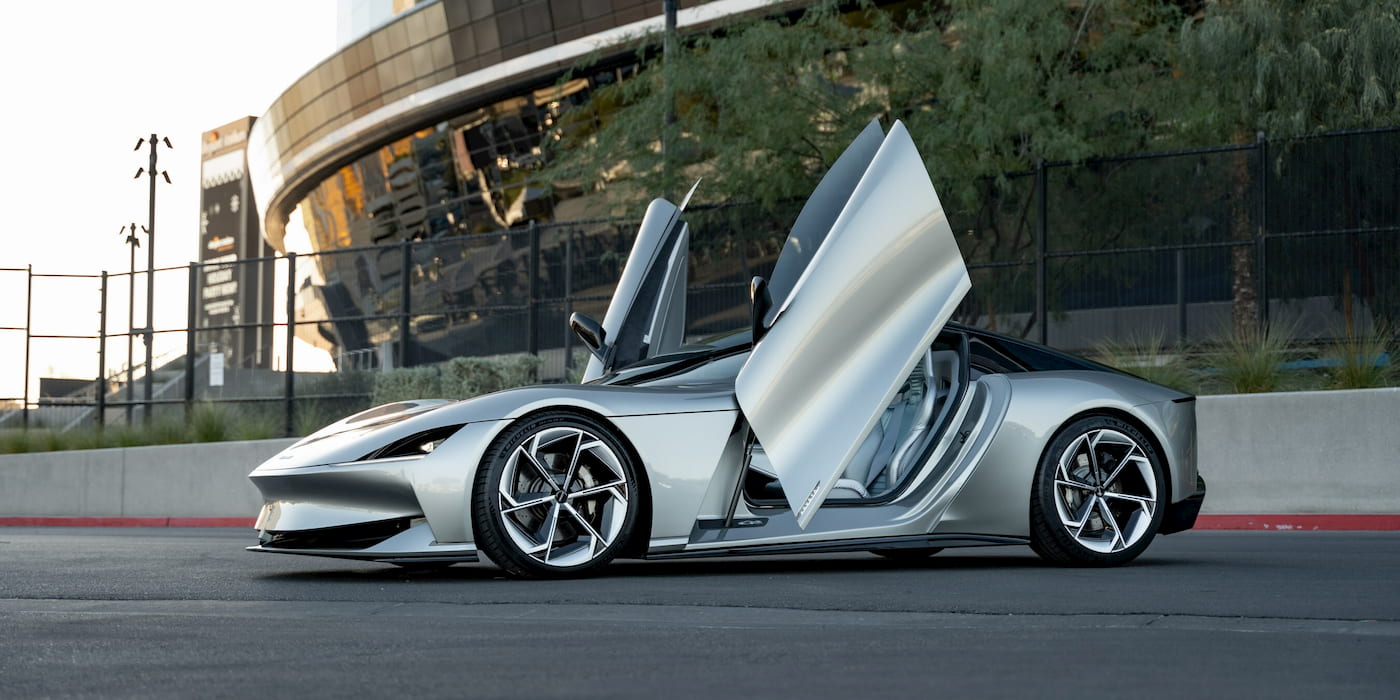
Earlier this year, the company launched the first commercial solid-state battery program in the US through a partnership with Karma Automotive.
When can we expect to see them? During an interview with The New York Times in December, Huang said Factorial’s batteries could be powering EVs as soon as 2027.
The company is also not worried about US automakers such as Ford and GM scaling back their electrification plans.
“The existing battery is not big enough, and it’s not light enough,” in other words, “it’s not efficient enough,” Huang explained, adding that “there needs to be a next generation to address the issues that our US consumers are facing.”

Compared to traditional lithium-ion batteries, Factorial said its Fest (Factorial Electrolyte System Technology) delivers significantly higher energy density, faster charging speeds, and a longer driving range.
Stellantis verified Factorial’s 77 Ah solid-state battery cells, which delivered an energy density of 375 Wh/kg over more than 600 cycles during lab testing last year. According to Stellantis, the cells cut charging time from 10% to over 90% in just 18 minutes with discharge rates of up to 4C.
The battery pack is also about a third of the size of traditional Li-ion batteries and 40% lighter (580 lbs vs 800 lbs). Factorial said its solid-state batteries also unlock a 50% longer driving range, exceeding 600 miles.

FTC: We use income earning auto affiliate links. More.